
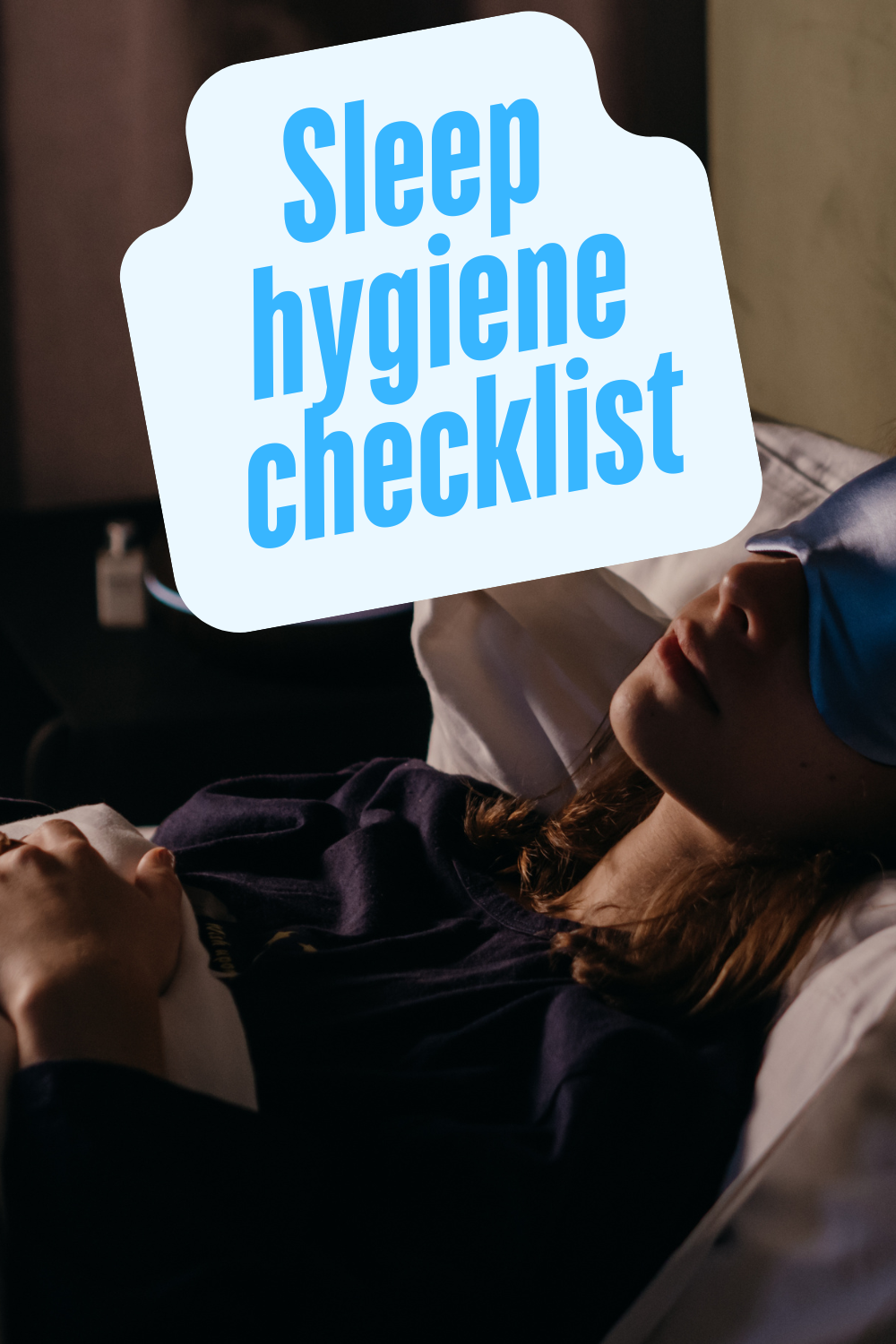

A sleep hygiene checklist in order to get better and higher quality sleep. We’ve all been there—tossing, turning, staring at the ceiling, and begging sleep to come. If you’re struggling to fall asleep or stay asleep, the solution might not be another supplement or sleep aid. It could be something much simpler: better sleep hygiene.
Sleep hygiene refers to the habits and routines that promote consistent, quality sleep. Think of it as self-care for your sleep cycle—an essential part of your physical, mental, and emotional wellbeing. Whether you’re dealing with autoimmune fatigue, chronic pain, or just feeling off, getting solid sleep can be one of the most powerful ways to support healing and energy.
Ready to get started? Use this sleep hygiene checklist to reset your bedtime routine and improve the quality of your rest.
Your Ultimate Sleep Hygiene Checklist
1. Stick to a Consistent Sleep Schedule
Go to bed and wake up at the same time every day—even on weekends. Your body’s internal clock (circadian rhythm) thrives on consistency.
2. Create a Wind-Down Routine
Start preparing your body and mind for sleep at least 30–60 minutes before bed. Try gentle stretching, journaling, a warm bath, herbal tea, or reading (but not on a screen!).
3. Ditch the Devices Before Bed
Turn off electronics at least an hour before sleep. The blue light from phones, TVs, and computers can disrupt melatonin production and keep your brain wired.
4. Keep Your Bedroom Cool, Dark, and Quiet
Aim for a room temperature between 60–67°F (15–19°C), block out light with blackout curtains or a sleep mask, and reduce noise with earplugs or a white noise machine.
5. Invest in Comfort
Your mattress and pillow should support your sleep posture and feel comfortable to you. Don’t underestimate the power of high-quality bedding! I use a weighted blanket and it has been life changing.
6. Watch What You Eat and Drink at Night
Avoid heavy meals, caffeine, and alcohol 3–4 hours before bedtime. Instead, opt for a light, sleep-supportive snack like almonds, bananas, or chamomile tea.
7. Get Natural Light Exposure in the Morning
Sunlight in the early part of the day helps regulate your sleep-wake cycle. Step outside or open your blinds as soon as you wake up.
8. Move Your Body During the Day
Daily physical activity—even just a walk—can make it easier to fall asleep. Just avoid vigorous exercise too close to bedtime.
9. Reserve Your Bed for Sleep and Rest Only
Train your brain to associate your bed with rest by avoiding working, eating, or watching TV there.
10. Practice Mindfulness or Breathing Exercises
If your mind races at night, calming techniques like meditation, deep breathing, or progressive muscle relaxation can help settle you into sleep.
Bonus Tips for Autoimmune Warriors:
If you’re living with an autoimmune condition, you may need even more intentional rest. Inflammation, fatigue, and pain can all disrupt sleep. Be gentle with yourself and view sleep as part of your healing journey—not a luxury, but a necessity.
Final Thoughts
Sleep is the foundation of physical and emotional health, especially when you’re working to heal from within. Incorporating even a few of these sleep hygiene practices can lead to big changes over time. Start with one or two and build from there—you deserve deep, healing rest.
Request a free foundations of wellness supplements kit.
Autoimmune Healing Blueprint Kit with Ebooks and Video
Did you find this helpful? Donate to help me be able to continue writing more content.
My Favorite Products (Affiliate links- if you make a purchase I may earn a small commission)
Thrive Market - healthy gluten free, sugar free and speciality online food and household products
Silk and Sonder Monthly Journals and Planners
My Portable Infrared Sauna
Self Care Journal
Olipop - healthy soda with probiotics and prebiotics
Digestion Kit
Stress Oils


