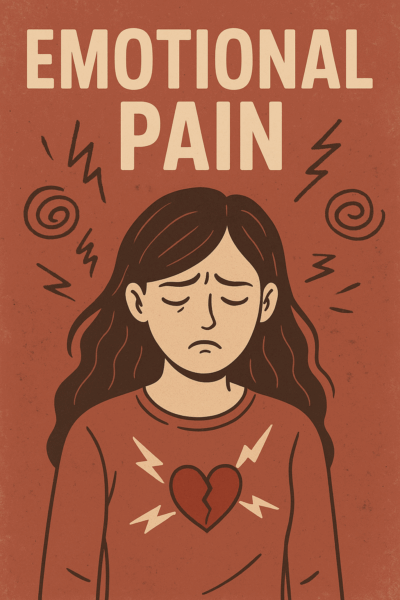

In this powerful episode, we dive deep into the connection between emotional pain and chronic illness. Jed Brotherson shares his raw and eye-opening journey of discovering that unresolved emotional trauma was fueling his autoimmune condition. After years of chasing physical treatments and temporary fixes, Jed hit a breaking point—and that’s when everything changed. You’ll hear how dissatisfaction with his career, and years of emotional numbing manifested in physical symptoms his doctors couldn’t explain. Jed opens up about the turning point when he finally acknowledged his pain, began processing it, and took the first steps toward true healing—not just in his body, but in his soul. If you’ve ever wondered whether your emotional health could be affecting your autoimmune symptoms, this episode is a must-listen.
Jed Brotherson is a father, podcaster, and transformational coach who helps people uncover the root cause of their discontent in under 55 days—so they can finally live the life they were meant for. His work is grounded in lived experience, having navigated years of deep inner conflict and emotional conditioning that silenced his true voice. Today, Jed brings compassion, clarity, and unconventional tools to help others break free from old patterns and step fully into their own power.
Free guide understanding 3 reasons you struggle with discontent. https://docs.google.com/document/d/1tebCn_0KDRoi3rUaOO6VJjw4lIwIiIbd2pOiwUhQCx8/edit?usp=drivesdk
Transcript
AnnaLaura Brown: For today’s episode of Autoimmune Rehab, I would like to welcome Jed Brotherson. So Jed, why don’t you start off by telling us a little bit about who are you?
Jed Brotherson: My name is Jed Brotherson.
Jed Brotherson: I’m a father, podcaster, and life coach. And I’ve created a system to help people identify the root cause of their discontent in under 55 days. and we’re just spreading the message and helping people get out there as they’re searching for ways to break the autoimmune type thing where I’ve had history of pain back in the past and…
Jed Brotherson: and just helping people understand that we can find ways to work through this and live the life that we want.
AnnaLaura Brown: That’s awesome.
AnnaLaura Brown: That’s great because you’re right. I mean, the thing is what a lot of people don’t realize when they first get an autoimmune condition that one, autoimmune conditions don’t just come out of the blue. there’s always a history. There’s always a reason why you developed that autoimmune condition. And it’s not only physical, it’s also emotional and impacts, your whole body, mind, and spirit like we like to say. So, if people are really discontent, really not happy with their life before they have an autoimmune condition and then they get an autoimmune condition, it’s going to be even worse. Absolutely. So, I know part of your history was that you had degenerative back disease along with that, some pretty severe arthritis.
AnnaLaura Brown: Tell us a little bit about…
AnnaLaura Brown: How did you start off finding out that you had this going on?
Jed Brotherson: So it maybe…
Jed Brotherson: if I back up a little bit in my history to say I was working in a career as a electrician. I had built up my own company. This is back around 2007209 that we had a economy or housing bubble happened right there.
Jed Brotherson: And what I felt was the best choice for me at the time was to go back to school and I went back into retrain as a registered nurse.
AnnaLaura Brown: Wow, that’s a big jump.
AnnaLaura Brown: That’s a big career jump.
Jed Brotherson: It was a little bit of a jump. It was lot of culture change in that. There was many aspects that it was interesting to make that big of a jump.
Jed Brotherson: And I look back at making the choice and it felt like the safest thing for me to do. it also looking back was not something that was lined up with my life path, my vision of what I wanted to do but it felt like the safest thing. And so as I continued to do that, I wasn’t picking up on the signs from my body that saying this is not what you should be doing. So things would get worse and I would get more back pain and more neck pain. I mean it to where I was thinking about the pain pretty much 247. and then just for me I found little things in my research.
Jed Brotherson: Have you ever heard of David Wolf?
AnnaLaura Brown: Yes I have.
AnnaLaura Brown: Yeah, I follow him on social media. He has some really good stuff out there, actually.
Jed Brotherson: Yeah, I’ve really just picked up on a handful of simple daily things that he teaches that we can do to improve our diet and health. And I’ve tried to the most simple ones start putting a little salt and charcoal in what we drink in the morning, activated charcoal to add that into our diet.
Jed Brotherson: And I think just those things by theirel have made dramatic improvements in my life. what kind of things have you found?
AnnaLaura Brown: …
AnnaLaura Brown: that’s interesting. Yeah, so the whole aggravated charcoal thing, that really helps with a lot of detoxing because one thing, that I do and that a lot of people don’t realize is that detoxing is really when you have an autoimmune condition, more than likely have a buildup of toxins in you. And that’s one of your challenges. And the same thing with a lot of chronic pain is that you somehow got some toxin buildup from whether it’s from environmental, whether it’s from, in my case,…
AnnaLaura Brown: it was actually some teeth that had mercury fillings that had started cracking open and leaking mercury into my system.
Jed Brotherson: Okay.
AnnaLaura Brown: But, all different kinds of stuff. And the activated charcoal can be really good. I’ve experimented with that a little bit. For me, some of the bigger things are having an actual daily routine that you follow and stick to it and making myself exercise pretty much first thing in the morning. I tell people they should move within 20 minutes of the first hour that you’re awake.
Jed Brotherson: That daily part is a big factor where I know when I was working as a nurse it was hard for me to be able to feel like I could get the exercise part into my routine.
00:05:00
Jed Brotherson: we were up so early and then if we worked late. I mean the job that I did sometimes we could do long days and so found it hard to sometimes get the energy to stop by the gym on the way home or the time. and so just that you’re saying I used to find that to be a struggle but now it’s different. I just put it on the calendar like the coaches say and make it happen. And I do it so that it feels good for me. I don’t feel like if I have to make 15 minutes, I don’t make it so I punish myself if I miss. but I have a certain routine of I do so many pull-ups in the morning and I do so many steps out to get to the bus stop or whatever. And on different days when it’s not taking the kids to the bus stop, then it’s different things. But I’m with you.
Jed Brotherson: We got to be active and moving early and often. 13 years.
AnnaLaura Brown: For sure.
AnnaLaura Brown: So, let’s talk a little bit about So, you said you make moving that leap from being an electrician to a nurse. You felt like it really wasn’t a fit. How long was it before you finally were like, “Enough’s enough. I need to change careers because I’m just really not happy in this and this is affecting my pain and my overall health. Wow.
Jed Brotherson: 13 years. Yeah. looking back at it in the beginning I wanted to always associate it with maybe it’s just what I’m currently doing isn’t making me happy or I wasn’t making the connection with I hadn’t resolved the patterns from my past that were causing me to continually choose these choices that were bringing certain circumstances into my reality.
AnnaLaura Brown: Wow, that’s crazy.
AnnaLaura Brown: Did you jump around to different jobs in nursing thinking that maybe if you had a different job but you were still a nurse that might fix it?
Jed Brotherson: I did I did some dialysis…
Jed Brotherson: which I loved. I worked as an endoscopy nurse with the gastronurologist which I loved. there’s different aspects that I tried that I loved and enjoyed those aspects for what they were just not part of my whole path. I like the technology and the things that we have to be able to help us get our health back.
Jed Brotherson: when I was a diialysis nurse to be able to help a client who comes in and I mean it’s the physician lines up all the orders and all the things that we’re doing but I mean once they’re in the clinic it’s kind of rewarding to be able to hook that system up which is literally them putting their life in our hands and filter their blood and let them return back to their normal life when they’re done. And it had its own rewards, but it just wasn’t part of my path.
AnnaLaura Brown: Yeah, for Absolutely. Yeah, I can see that. that would be really interesting perspective to have. My own dad has actually been on dialysis as of this recording about five and a half years. So, I can definitely relate to, it’s given him,…
Jed Brotherson: All right.
AnnaLaura Brown:
AnnaLaura Brown: more time in his life. although he’s sick a lot. But, that’s a whole different conversation of itself. But, yeah, I can see how, that would be a little rewarding to be able to do that for people. So, Wow.
Jed Brotherson: And then getting over to endoscopy, I mean, we would literally take cancers from clients, right? and help them return back to their normal life and just seemingly make big differences. but still inside of all of that, my pain was increasing, my weight was increasing. I just couldn’t seem to figure that part of my life in the last just over a year, I’ve lost 100 pounds. I feel better than I felt in years. And it’s largely just due to taking the time to find out just who I am and what I want, what makes me happy.
AnnaLaura Brown: For Yeah, absolutely. Yeah. And that plays a big role as So I know one of the things that you mentioned is that you had studied epigenetics a little bit with Bruce Lipton and a lot of people think I’m just a victim of my genes when it comes to my pain maybe one of our parents had thyroid issues or…
AnnaLaura Brown: other autoimmune issues or chronic pain and we think we’re just doomed because it’s in our genes what would you say to people like that?
Jed Brotherson: …
Jed Brotherson: I just had a talk about this with one of the therapists that I’m working with. and she does this modality called cogn movement, which for me is amazing. And while I’m understanding that I’ve created this pain in my body, I just had recently had a flare up and it’s a nerve pain. And when that nerve pain is pinching, I’m still thinking, okay, what did I do today to get me back here where I thought I had this problem resolved.
00:10:00
Jed Brotherson: so thinking back with Bruce Lipton and for all the listeners if they don’t have that TV platform Gaia and where they can be able to watch these programs that are available by these people like Bruce Lipton and so many of these just the thought leaders that are helping guide the way. Bruce Lipton helped me make that connection because I grew up my entire life thinking if there’s an issue it’s a genetic problem. If there’s an issue it’s in my genes and I can’t do anything about it. All I can do is manage it. with Bruce Lipton being able to offer the insights about no this is what we’ve been telling our gene to do. So this is what it’s doing.
Jed Brotherson: And the moment I started changing that and telling my body to do something else, it seems to just respond and start healing and start feeling better. And then it has to be practiced every day. that’s the trick for me that I found is being consistent. When you’re talking about being in a routine,…
Jed Brotherson: those are the things I have to have in there. my affirmations to remind and affirm that this is how I start my day. I don’t have pain anymore. That’s part of my past life and making sure that this is part of how I set the day and that’s largely what I credit to changing so many things for me.
AnnaLaura Brown: Absolutely.
AnnaLaura Brown: That’s great. And your mindset about pain is really a big one. And I challenge people that are listening to this, if you really feel like that’s not the case to try it. And we’ve covered pain as well as several other episodes. I actually even have a whole episode with an interviewer with a lady who has her PhD and studies and researches pain at the University of Michigan. And she did a whole interview with me and has published a book all about 30 days to get rid of chronic pain. and she specifically says that a lot of it is in your psychology and your mindset and everything else. So, some of you might be listening to this and…
AnnaLaura Brown: thinking, “No, that can’t be.” But no, it really is. The power of your mind is really huge when it comes to your pain. So, try it. You have not everything to gain and nothing to lose.
Jed Brotherson: Right. Right.
Jed Brotherson: But that has largely helped me just do things and then just saying yes. my kids teach me lessons in everything that I do every day and my eight-year-old’s asking me, “Dad, let’s have a yes day. Let’s have a yes day.” And so one day I just practice saying yes every thing that she’s asking me to do. And most of it was running around outside playing soccer and getting down on the ground and playing games.
Jed Brotherson: And so I thought it just gave me an opportunity to think about what I’m saying yes to consciously rather than what I was trying to avoid. And I just realized one day I was hiding behind my paint. I was hiding from doing things that I didn’t want to do in my daily life behind pain.
Jed Brotherson: And when I just started having fun I was just playing with my kids, it just made such a bigger difference in my life.
AnnaLaura Brown: Absolutely. That’s amazing. So, you make this career move, you quit nursing, you’re more in the life coaching space, but let’s say you’re in a little bit of the health coaching space, too, because, your background as a nurse, everything else, quite a bit about health and, how to help people improve their health as well. I’m assuming you didn’t just immediately stop having your pain.
AnnaLaura Brown:
AnnaLaura Brown: So, what other kinds of changes did you make other than your career change that you feel like really helps you get over this hump of this chronic pain problem?
Jed Brotherson: …
Jed Brotherson: a awareness and ascension is really the only two things I could say. I was just taking a look in the mirror one day and I said, “Man, I’m becoming something that I don’t recognize anymore. So, what am I doing that’s causing that? And I started realizing, there is a bowl full of candy at every desk. not this isn’t literally, but there was just lots of treats and sweets available as a nurse and not a lot of time to eat structured meals.
Jed Brotherson: And at first I was like, this is just my job, so I’ll just try to make the best structure out of this meal thing as I can. But increasing a awareness around one thing at a time. for me, meals, I literally noticed one day, I was like, how come everybody that gets to stop and have breakfast at the coffee shop are all skinny and healthy? And this is just something I noticed. And I put that pin in my mind and I kept watching.
00:15:00
Jed Brotherson: And then I find out that when we eat on the run, we’re in our fight orflight mode. And we don’t have time to process in a healthy way. And so what I just started doing was not eating unless I could be in a moment of gratitude and thankfulness for the food that I was about to eat. And then as soon as I could be in that mode, then I would eat whatever that is. I try to eat the best meal I could. and just being more present with the things that I put in my mouth. I think was one of the first biggest changes. and then that let me find the next awareness for the next thing that I could improve in my life. And while you’re correct, the pain didn’t just up and…
Jed Brotherson: disappear. because like I said, it can still recur. if I get real angry or something, I can get my muscles to tighten back up, So it’s a daily thing.
AnnaLaura Brown: For sure.
AnnaLaura Brown: Absolutely. So, let’s talk a little bit about how you help people now. So, one of your signature things is that you help people get to the root cause of their discontent so that they can actually live the life they’re meant to get rid of that pain, whatever it is that they need to do to be a much happier. What is one thing or…
AnnaLaura Brown: let’s say, one simple thing that you feel like somebody can do to start to develop more awareness around, why they might have discontent.
Jed Brotherson: …
Jed Brotherson: the first thing and the easiest thing because it’s what helped me is Esther Hicks.
Jed Brotherson: Are you familiar with her teaching?
AnnaLaura Brown: Yeah.
AnnaLaura Brown: Uh-huh. Yeah. Yeah.
Jed Brotherson: She says something where she says if things are in your life are in such a way that you’re just not getting what you want is what you don’t want. And that allows you to increase your awareness around what you do want.
Jed Brotherson: And at first I thought that sounds so silly to me, but I kept thinking about it and it just helped me start thinking understanding that really behind that message is when she’s talking about how to tune our radio tuner to what we want more of in our life. and so the essence and the simplicity of it is let’s stop focusing on what we’re not getting and focus on how we can serve. this will bring more abundance and help our life the most or just if we realize what we’ve tuned into, maybe we can also think about what we might be missing out on if we’re still attracting these things.
Jed Brotherson: So the simpleness is what are we tuning our radio tuner to? The complexity for me was how do you switch the station? that was for me the learning steps.
AnnaLaura Brown: Yeah, that’s good. For Absolutely. So before we go in and talk about, how people can connect with you, what they can get from you, let’s answer this other last question here. maybe we’ll see if there’s anything else that we missed that you want to share with people. But if you could go back in time let’s say, when you first started really having a lot of your chronic pain issues,…
AnnaLaura Brown:
AnnaLaura Brown: what is one thing that you wish you had known then? Yeah, it’s a good one.
Jed Brotherson: The pain is a result of our emotions.
AnnaLaura Brown: And anything else you want to share with people before we tell people about the free report that I know you have for them that they can go download and how they can connect with you?
Jed Brotherson: What I’m finding as I talk to people is there’s just so many of us that haven’t allowed ourselves to even contemplate or think about the question, what makes me happy?
Jed Brotherson: There’s so many of us out there we’re so caught up in the daily routines that we’re trying to show up for other people, be it our friends or our families or co-workers or whatever it is. we’re so caught up in this showing up to be more that we don’t ask ourselves enough about what makes us happy. And so just as they get a chance to read through that gift,…
Jed Brotherson: just contemplate that what makes you happy. if you feel like you’re ready to take a couple change a couple steps to make some big changes in your life and increase your happiness, then that’s what I’m all about.
00:20:00
AnnaLaura Brown: That’s awesome. That’s great. So, tell us then a little bit about this free guide that you’re going to offer people and we will have a link to it in the show notes so that people can go find it because the link’s too complicated to, say that out loud. If you have a website or…
AnnaLaura Brown:
AnnaLaura Brown: like an Instagram or any other places that people can connect with you, tell us where they are and then we’ll make sure that we link them in the show notes.
Jed Brotherson: All right.
Jed Brotherson: I don’t have those links memorized. some of them there’s one J D brothers and J D is in David B R O T H E R S O N com and that one I’ll have to actually double check that part I’ll have to just make the notes cuz I haven’t put the link part into my speech. But what they’ll find in the free guide is the three reasons that and I put it in there. three reasons that you feeling discontent might sound vague to some, but really discontent can be described so differently by so many people.
Jed Brotherson: as you take a look, what is it in your life that you’re not feeling fulfilled in? is it family and relationships? Is it personally? Right? I worked with a client recently that was just describing how every time they look in a mirror, they really can’t feel great about themselves or…
Jed Brotherson: nice things. And that comes up from time to time. Guys have a really hard time being honest with people about that. very rarely does a guy ask me that question or bring that issue up. but it’s nice to be able to work with people that are willing to make these changes and be honest with ourselves in such a way
AnnaLaura Brown: That’s awesome.
AnnaLaura Brown: For thanks for coming on, Jed. Like I said, we’ll have a link below so people can grab the guide. We’ll see, if there’s any else he wants to link, we’ll include those as well, so you can check those out, connect with him, and realize that you are in control of your pain. And if you don’t like…
Jed Brotherson: Exactly.
AnnaLaura Brown: where you’re at in life with your health, your career, whatever, you can change it.
Request a free foundations of wellness supplements kit.
Autoimmune Healing Blueprint Kit with Ebooks and Video
Did you find this helpful? Donate to help me be able to continue writing more content.
My Favorite Products (Affiliate links- if you make a purchase I may earn a small commission)
Thrive Market - healthy gluten free, sugar free and speciality online food and household products
Silk and Sonder Monthly Journals and Planners
My Portable Infrared Sauna
Self Care Journal
Olipop - healthy soda with probiotics and prebiotics
Digestion Kit
Stress Oils


