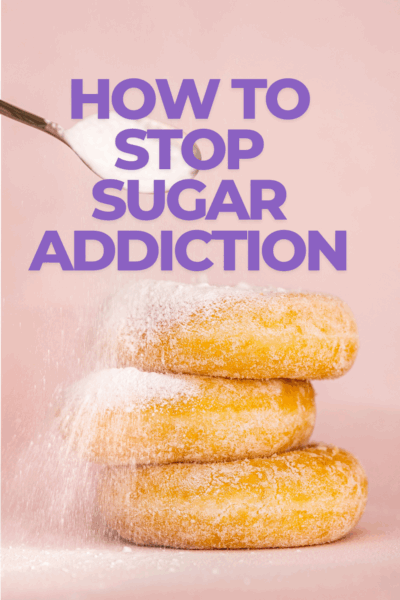
How to stop sugar addition with Mike Collins the no sugar man. Mike hasn’t had any sugar in 37 years. Yes really. Learn about how sugar is harming your health and your autoimmune condition and making it harder for you to heal from your autoimmune condition. Get tips on how to stop your sugar addiction and finally go sugar free. This episode will shock you and surprise you as to how common sugar is and why you really need to give up sugar if you want to heal your autoimmune condition.
Mike Collins believes sugar addiction is very real and not to be taken lightly. As a person in long-term recovery from substance use disorder for over thirty- nine years, he took a keen interest in what sugar was doing to him and his friends in early recovery. After much research and experimentation – he quit sugar with the help of amazing mentors. He then raised two children sugar-free from the womb to six years old, and as they grew, he rewrote the rules for sugar and kids in childhood. He takes his stewardship of SugarAddiction.com and QuitSugarSummit.com very seriously and aims to provide information and community for anyone wanting to curb or quit sugar. Hundreds of thousands have read his book The Last Resort Sugar Detox, and tens of thousands have completed his online 30-Day Sugar Freedom Challenge.
http://quitsugarsummit.com – learn more about this annual summit to help you quit sugar.
Transcript
AnnaLaura Brown: Welcome to Autoimmune Rehab. And today I am really excited to be talking about a topic that kind of surprises me. We haven’t really addressed it that much, but is the idea of sugar addiction and how sugar influences autoimmune disorders. So today I have a expert on sugar and sugar addictions, Mike Collins.
Mike Collins: …
AnnaLaura Brown: So Mike, welcome to Autoimmune Rehab. Why don’t you start off by telling us a little bit about yourself?
Mike Collins: I am the sugar-free man on social media and the founder of sugaraddiction.com. And our biggest event is The Quit Sugar Summit is we’ve been for 10 years we’ve interviewed over 400 of the world’s leading scientists, authors, and educators and coaches on sugar and sugar addiction. Most of the folks have been languishing in anonymity for years, decades, some of them. And we’ve kind of created the ecosystem that’s been studying.
Mike Collins: What’s the most exciting part about it is that for a hundred years we’ve been studying what sugar has done to the body diabetes and weight gain and fatty liver heart disease etc. But now the major scientists are studying the brain and the emotions and the effects of sugar on the brain. So, it’s been quite a journey. I’ve had sugaraddiction.com for since 2009, but it wasn’t until my book came out in 2018. I raised a couple of sugar-free kids and they always said, “Dad, you should write a book.” So, I was kind of semi-retired. I I wrote the book.
Mike Collins: And I started coaching in 200 and I had started before then but really not in earnest. And between 2018 and 2020 I was coaching and certified a couple of coaches. But when the pandemic hit all hell broke loose it was just crazy. You saw the newscast where everybody was buying out all the sugar. You saw the pictures and sugar, no flour, no candy, no cake, no ice cream, no soda, no beer, alcohol. Everybody was just at home comfort eating and soothing themselves, which is an important part of the message that we deliver.
Mike Collins: And so we had already started growing online support meetings and we had two a week and it was nice and we had our coaching clients there and whatever but we went from two meetings a week to five meetings a day in a period of 18 months during that pandemic and…
AnnaLaura Brown: Wow. He
Mike Collins: it’s never slowed down since and we’re still growing. We’re certifying coach. We just recently got approved by the National Board of Health and Wellness Coaches. And what we do is, we do one-on-one coaching and we certify coaches so that they can teach others. So it’s podcast version. It kind of brings up more questions than it answers, but that’s how I ended up as the sugar-free man thing came along during the pandemic and it just kind of stuck. And so that’s what I’ve used on social media. you can reach sugarfreeman.com if you want, sugar detox.com.
Mike Collins: We have kind of encapsulated the entire ecosystem and our summits kind of create a place…
Mike Collins: where all of the experts can meet every year. It’s an online summit. It’s free and it’s every January. So we have some of them on my sugar addiction channel on YouTube.
AnnaLaura Brown: Cool.
AnnaLaura Brown: We’ll definitely have to link to those in the show notes below so that people can check it out. And do you have recordings somewhere of the prior summits that people can check out or how does that work?
Mike Collins: But you can go there and you can purchase the back ones I think. Yeah. Yeah. you go to purchase this and…
AnnaLaura Brown: Cool.
Mike Collins: but yeah, no,’re Everything’s out there and this year we’re going to start putting them out the older library out on YouTube for free. So, keep an eye out for that.
AnnaLaura Brown: Yeah, we’ll definitely have to check that out. So, let’s delve in a little bit to your personal story So, what led you in the beginning anyway to actually give up sugar? Because obviously, in order for you to coach other people to give up sugar and…
00:05:00
AnnaLaura Brown: to develop the books and raising kids without sugar, all that kind of thing, there has to be a backstory as to, why did you give up sugar in the beginning?
Mike Collins: Yeah. No,…
Mike Collins: It’s a good question. So, it really starts a generation back. My mother was my favorite sugar junkie and my grandmother died when she was only eight years old. And they lived out in the country and they owned the country store across the way.
AnnaLaura Brown: What?
Mike Collins: And my grandfather had to move in with his sister and he had to work and she was the last child. And so what happened was anytime we made a deal with his cousin Anytime my mother walked into that store, he said, “Put it on my tab and give her any candy that she wants.” Which was a wonderful thing to do for an eight-year-old who just lost her mom. But what I think it set up in people nationwide and worldwide now because we’ve exported our ridiculous diet all over the world is that my mom believed that sugar was love and that’s how I grew up believing and she did. So we had unfettered access to the sugar bowl.
Mike Collins: we could eat as much sugar on the corn flakes and our Cheerios as we wanted to. And I would scrape half an inch of sugar off the bottom of the bowl with the milk. And Kool-Aid with three times the recipe, three cups instead of one. Bread and butter and sugar sandwiches were staples when we didn’t have food. and then that’s before the candy and the cakes and the cookies my mother baked every Saturday in the biggest bowl I’ve ever seen in my life. And it was just fast forward. That’s how I grew up. I ran into beer. This is an important part of the story. So I ran into beer at 14 years old. And I knew that beer changed my state.
Mike Collins: It changed how I felt. I was, kind of shy and we could drink beer behind the high school and I could talk to girls at the dance. And that party lasted till I was 28 so I’ve been sober 40 years in and like I said, for the fir I really wanted to just get healthy. I’m sober and I want to get healthy. And I read a book called Sugar Blues was written by a guy named William Duffy ended up marrying Gloria Swanson, the famous movie he was at a party one time and he was getting in his co two lumps of sugar in his coffee.
Mike Collins: He was a journalist, so that’s why I was there. And this voice from behind said, “I wouldn’t have that in my house, let alone my body.” And it was to Gloria Swanson. And they ended up getting married, her third marriage. And they promoted that book heavily in the late 70s and early 80s. And so it just stuck somehow. And I somehow convinced my wife at the time when she got pregnant to have no sugar in the womb or it lasted until the boys were six years old. They’re twins.
Mike Collins: And really just in my heart and my soul after now the research in the last 3 to 5 years on the brain their brain just developed better that there’s now big nonprofits like thousand days and there’s a lot of two or three nonprofits about the nourishing of children and pregnancy and whatever and they are focused a lot of them some of them are talking about the sugar and stuff, but the brain grows so fast in that time period that my boys are literally rocket scientist perfect scores on their SATs, smart, brilliant, and one of them works for a quantum computer company. So, it’s like I’m just not that smart, and in my heart I know that’s what happened.
Mike Collins: And if you move, they had sugar once or twice a month outside birthday parties, but they never had it at home for the rest of their childhood. And that’s about it really. I mean, I went on to have a regular career. I was sugar-free. I’ve been sugar-free. I can tell you to the the day that I got sober, but I really can’t tell you. It was before the birth of my kids. So, it was over 36 years ago that I’ve not had sugar myself, flour or caffeine. So,…
00:10:00
Mike Collins: that’s kind of my short story of the evolution into it. but appreciate you asking, right?
AnnaLaura Brown: Yeah, that’s pretty amazing because,…
AnnaLaura Brown: I know a lot of us will give it up for a short time frame, but actually giving it up for the long haul, for years and years, that really takes some dedication. So, it shows how much you care about your health, all that kind of thing. But you’re right, though. I mean, it’s super addictive. And what I find that a lot of people don’t realize is you have sugar in, …
AnnaLaura Brown: your baked goods and your ice cream and things like that, but there’s, quite a bit of sugar and even things like ketchup and a lot of sauces and dressings and other things that you don’t associate as sweets, per se.
Mike Collins: It’s so true that when I was younger there were very few obese kids in a school of 3000 there was maybe three or…
Mike Collins: four and now it’s over a third of the kids and it’s really because I think it’s 84% of the food products on package bags cans they have sugar in it and the story is simple really after the tobacco litigation in the 80s7s and…
Mike Collins: 80s the tobacco companies bought up all the food companies and used their addictive model there’s actually sugar in cigarettes. both and…
AnnaLaura Brown: Really?
AnnaLaura Brown: I don’t think I even knew that. But
Mike Collins: they know it because it helps bring people back. And it’s important to notice note that emotional connection with the sugar because this is the golden key to the golden lock that is for the transformation process of any of your audience who really wants to quit sugar. They don’t want to use it anymore and they found it difficult because they’re all focused on the ridiculous eat less and exercise more mantra of the 78 billion diet industry. And really that doesn’t work. It’s just not effective.
Mike Collins: You have to realize that this is closer to a drug and alcohol recovery program than it is a diet or weight loss program. And until you understand that you’re not looking for a sweet taste on your tongue when you have sugar cravings, you’re looking for a dopamine hit, a deep neural limbic brain soothing. until you bring that up to your conscious level you’re just never going to succeed in your process. We have people come to us have tried the average is 7.7 but 8 10 12 diets over eight five or what am I talking 30 or 40 years and they just can’t quit sugar. We have a lot of recovering alcoholics and drug addicts who can’t quit Very addiction savvy people because they’ve never put this construct together.
Mike Collins: They never really made it clear in their mind that a certain percentage about a third was the chairman of the board of the food addiction institute during the pandemic and all of those educators and the researchers and professors and MDs and PhDs had come up with not even an idea data over the years of working with sugar addicts that about a third of people biochemically cannot ingest sugar without setting up cravings for more sugar.
AnnaLaura Brown:
Mike Collins: And that’s tracks pretty well with the obesity numbers of a third of the adult population. So, it’s, one of the things about doing the podcasts that I do and I do a lot of them is because this message is not well understood or accepted, but it’s definitely not even something that’s clear to people.
AnnaLaura Brown: Yeah. Nothing.
Mike Collins: It’s kind of sad really because sugar is the original gateway drug. it’s it like when the statistics as well as I do that anybody that loses any amount of weight gains all back in the first year and then they add some they they lose 50, they gain 55 and the problem is very easy to explain when you apply this construct. you can exercise for a time period, but somewhere in the next whatever two or three months, year, you are going to run into an emotional problem, a divorce, a death, financial job creation, or whatever.
00:15:00
Mike Collins: you’re going to run into something and you’re going to fall back on the emotional management system that you have used…
AnnaLaura Brown: Mhm. Yeah.
Mike Collins: since you were a child. it’s a very common construct in the world of alcohol and drugs that if you used alcohol and drugs when you were 14 or 15, you stopped growing emotionally. You’re right. Your relationships are upside down. your career, everything is like because you never solved any problems. You just numbed out the next day and postpone life’s adult problems. Will you extrapolate that backwards to four or five, likely in the womb, but three or four or five years old?
Mike Collins: It’s like children get this giant adult-sized rush of dopamine, and they subconsciously start to equate the two together. And it doesn’t and it takes our type of intervention to raise it to the conscious level. And the poor child is thinking, I’m worried. sugar and this is how we are managing our lives. The entire adult population of the world now is and…
AnnaLaura Brown: Mhm.
Mike Collins: and this is literally underground subconscious not understood that we are managing our emotional lives with sugar. And this is before the necessity for the biochemical repair that is required in the brain and abstinence will give you. it’s crazy how bad sugar destroys the brain literally puts holes in the brain.
Mike Collins: tens of hundreds of thousands of MRIs. Dec Dr. Daniel Aemon I mean it really is destroying the brain and this emotional ability to handle things sugar is being used for that. So, …
AnnaLaura Brown: Yeah, that’s a good one.
Mike Collins: I mean, go ahead.
AnnaLaura Brown: And I know one of the questions that I think we ought to talk about is, the whole concept of, do I have to stop all sugar forever? And I think, you would for sure say that, obviously those one-third of people that have that chemical wiring, yeah, they have to give it all up forever. But what about the other twothirds of people? Would you say that everybody really stop all sugar forever?
Mike Collins: Yeah, that’s a good question. So the second third of people, it’s funny that it breaks down in thirds, but about another third of people are what we call harmful users. And because of what you mentioned in the food system having so much sugar in it, their body has been adapted to sugar and they get a little bit of relie, they get the same kind of emotional relief for a second or two. And with a reset, those folks can go back to using sugar occasionally. I mean, hopefully they have kind of understood that they’re going to try and cut out the ketchups and cut out the sauces and stuff that have a lot of sugar in them and cut back on the sweets and definitely not drink sodas, drink sugar.
AnnaLaura Brown: Yeah.
Mike Collins: But after that reset, they can do a little normal sugar use. And one of the big ones is the sodas and the drinking of the sugar. that’s kind of ridiculous in a lot of ways. and then there’s a third of people we all hate. No, just they can take it They just can take it leave it. it’s not a problem. So, yeah. I mean and the answer to your question is the people who are addicted have to my only job in life is to get people to feel viscerally what 90 days of sugar abstinence feels like. And if they can do that then it’s not my job to tell someone they’re an addict.
00:20:00
Mike Collins: is their job through our information to kind of assess that and there’s a fine line,…
Mike Collins: a 10% swing in between addict and harmful user. Some people can be a little both or whatever and they could slide into addiction if they keep using it so much, So, yeah, it’s a tough one. I mean, it’s hard because it’s not accepted. I mean, you quit smoking. Good job. You quit using sugar. What? Why? Yeah.
AnnaLaura Brown: Yeah, exactly.
AnnaLaura Brown: For Absolutely. So, let’s talk a little bit about the whole autoimmune component of sugar. I know that part of your story is that you have or had rheumatoid arthritis, which of course talked about that on a few other episodes is definitely an autoimmune condition. So, how do you feel like sugar impacts, rheumatoid arthritis, some of these other autoimmune conditions that people have out there? What does sugar do to that, would you say?
Mike Collins: Okay, I need a little sip of water here. So, I don’t want to throw such a terrible curveball at you that you’re going to hang up and…
AnnaLaura Brown: It’s okay.
Mike Collins: be upset, but we should work together and do a course because I interviewed who Elaine Lane is 99 years old. She’s the wife of Jack Lane, the famous fitness guy from the 50s60s. Literally the founder in 1935 of the original workout place, the first one, and a lot of equipment, machines. His television show is very popular. You can look him up on YouTube under the Sugarhollic
Mike Collins: It’s a grainy black and white television show where he talks about being a sugar holic. So during the interview with Elaine was about ready to give me push-ups at 98 when I interviewed her and she was doing leg lifts in her chair on Zoom. It was funny. I’m telling you this story because she told me that Jack believed sugar caused everything. And I believe it too. Okay. And rheumatoid arthritis is an absolute paper tiger. it is sugar addiction in my opinion. Now I’m going to qualify this. In my opinion, most autoimmune diseases are sugar toxification. rheumatoid arthritis clears in 95.
Mike Collins: We’ve done 41,000 plus detoxes and thousands of one-on-one coaching engagements and rheumatoid arthritis clears in almost every person. We had one woman had one knee replacement already and she had the second one scheduled and I said, “Give me 90 days.” That’s two and a half years ago. She’s never had that second operation. and lupus, thyroid stuff, autoim chronic fatigue. It goes on and on and on of the things that I have, the remissions that I’ve seen.
Mike Collins: We’ve have hundreds of type 2 diabetes remissions and autoimmune remissions in our communities because when you go abstinent of sugar and flour, your body changes again. The first thing that happens 95% is Everybody’s hands and knees stops hurting. I started to make people when I’m coaching hold their hands up to me and tell me what hands show me what their hands look like. My mother used to call her own monster hands because they were so deformed from the arthritis that they would go in different directions. The knuckles were gigantic. And this happens in all, the folks.
Mike Collins: I can almost tell how bad your addiction is by your hands. And for some people, it doesn’t happen to everyone even with rheumatoid arthritis, but I have seen it so often the whole my knees don’t hurt. And there is some obviously…
AnnaLaura Brown: Yeah.
Mike Collins: if you’re heavier it hurts your knees. But even as people are losing the weight once they stop the sugar and have their absence and they’re beginning to lose the weight they can walk again. They can, walk longer distances because their knees don’t hurt. s has been rheumatoid arthritis has been the one that’s been the most obvious and physically visible to us. the others, I actually believe people there’s a term used that isn’t used too much anymore.
00:25:00
Mike Collins: It’s called amotivational syndrome and it’s mostly was affiliated with a marijuana use where stoner sitting on the couch kind of thing.
AnnaLaura Brown: Yeah.
Mike Collins: And the chronic fatigue thing really if it was either diagnosed or even not just I always had no energy. that goes away pretty quickly because I believe sugar is an amotivational syndrome drug. I do believe that here’s the thing for a couple million years but 100 thousand years dopamine and when I say dopamine serotonin norepinephrine GABA oxytocin adrenal glands endorphins canniboid receptors every brain and body reward chemical in the body is affected by sugar and for a million
Mike Collins: beginning of years, we have evolved this reward system to chase food and sex and to keep the species alive. And where we are now is We can hack into that system by eating Oreos on the couch. And we don’t need to exercise. We don’t need to, because food is very plentiful. So, we don’t need this process. And we get this great reward by ingesting this substance. And we call it the difference between effort-based dopamine and substance-based Again, dopamine is popular, so I use it. and everybody knows what that means.
Mike Collins: And so it’s like we are using this dopamine system for a little micro reward instead of going to workout or going to the gym or going to yoga or meditating or praying or getting massage or all these other there’s lots of ways to self soothe. And the difficulty in the detox and the difficulty in the behavioral change process coming off of sugar is that you have to realize that this is going to happen and god forbid you had old sexual trauma or physical trauma capital T stuff or…
AnnaLaura Brown: Mhm. Yep.
Mike Collins: even if something you didn’t deal with a divorce or what have you and you haven’t worked it all the way through and grieved it. you used sugar and gained 40 pounds. You have to realize that you’re going the body has kept that grieving that pain it’s held on to it and it’ll begin to surface. Even the everyday stresses and strains will begin to be difficult for you, at least at first, until you adopt a new method of self soothing, a new method of, dealing with life’s, stresses and strains. And I’ve got hundreds of people that I’ve coached one-on-one who have had exaggeration, some of them, five years of talk therapy. Okay?
Mike Collins: they understand very clearly what their inner child issues. The problem is things don’t clear in 50 minutes in the office or on Zoom. People undo it on the way home at the 7-Eleven. it takes years to get over a death or a divorce or something and they have never really fully worked through it. They’re knowledgeable intellectually, but the emotional part has been numbed by the substances, right? It look again very common in drug and alcohol world that you have to do this work.
Mike Collins: And what’s missing in the quote unquote diet work and diet industry is that you have to go through this as well. the emotional eating folks and even the people in eating disorder clinics, you’re not well in an eating disorder bulimic or binge eating if you can’t ingest flour or sugar moderately.
AnnaLaura Brown: Mhm.
Mike Collins: And that’s just totally And the emotional eating folks, same thing. what’s eating you kind of idea they only got a part of the equation right too for some people that abstinence will be required for full healing. So, it takes about the arc of a podcast like this to explain why people if I tell them to stop eating steak for a month, no problem. They stop eating broccoli for a month, they can do it. But when they try to quit sugar for even two or three days, five days a week or whatever, they can’t do it.
00:30:00
Mike Collins: And that’s because of this relationship to the psychological neurochemical the nucleus incumbents the neuropathways in your brain have used this substance for self soothing for decades and…
AnnaLaura Brown: Okay.
Mike Collins: you want to stop it and you don’t replace it. The people that have a modicate amount of success are the exerciser types. But the exercise is not for burning calories. It helps to self soothe you. But when you hurt yourself or you can’t exercise, then it comes raging back because you don’t have five or 10 different ways to self soothing. I mean, it’s not complicated in a scientific way. But it’s just not well known this arc of self of transformation. This arc of how do I stop doing something? Most it’s so funny because 95% of my clients are women between I like to say 40 and…
Mike Collins: 90, but it’s really 50 and 90. and they have just narrowed down decades of dieting and up and down yos to their Achilles heel being sugar and…
AnnaLaura Brown: Yep. No,…
Mike Collins: they’re willing now to look at it. So, I’m sorry. I don’t mean to hijack your podcast, but I …
AnnaLaura Brown: that’s okay. No, this is good. No.
Mike Collins: I get off on my little tates about this because I really want people to understand this because once they feel it viscerally, then it makes a lot more sense to them. the common refrain at about day 15 is Mike, am I I’m losing my mind? Because you start to be like this free floating worry, fear, anxiety. People get weepy and they don’t understand what’s happening and…
Mike Collins: they don’t even say to themselves I know candy or soda will stop that feeling. It just happens. They say I had a craving for soda.
AnnaLaura Brown: Mhm. Yeah,…
Mike Collins: They haven’t connected the unconscious with the conscious. And then when it comes up like that, they just say, 15 days, they’ve lost seven pounds. They’re like, ” I’m just going to have a little bit of chocolate, right?” Because they have this free floating anxiety, worry, fear, guilt, whatever, and it stops it for a minute, and then the next day they do a little more, and then they totally lose it. That’s how people gain all their weight back, Yeah.
AnnaLaura Brown: for Absolutely. Yeah, I can definitely see that. So, I think to not make this too long, let’s cover a couple other questions before we finish.
AnnaLaura Brown: So the other thing I want to ask about is a lot of times I’ve done myself with people 7day sugar give up sugar all that kind of stuff and things like that and people sometimes wonder what all exactly is sugar when we’re talking about sugar because there’s all these different forms of sugar so what would you say about things like fructose or let’s even expand that to things like honey and…
AnnaLaura Brown: maple syrup do you count those as sugar or do you not count those as
Mike Collins: I get in a lot of trouble,…
Mike Collins: a lot of blowback for this, but you mentioned the important most appropriate word in the whole process is I always tell people if you want to get off sugar, study fructose. And fructose is a molecule that is not changed whether it’s honey or fruit or fruit juice or dried fruit. It’s the exact same molecule as the fructose molecule in table sugar. So for your audience, half of the table sugar molecule is glucose, half is fructose sweetness in general has been evolved that we would chase sweetness in evolutionary times.
00:35:00
Mike Collins: Because mother’s milk and honey and fruit, but here’s the thing. We only got fructose once or twice a year back in the day, past 10,000 years ago. Once and that was not, this fruit you see today. It was those nasty little crab apples and bananas. You’ve probably seen these things…
AnnaLaura Brown: Mhm.
Mike Collins: where these fruits have been hybridized for the sweetness, for fructose, and they don’t even resemble what they were in the wild. It was a very symbiotic thing in the wild where we would eat the fruit and distribute the seeds. and if you wanted to get risk getting stung by a bee once a year, twice a year, you’d get a little honey. But other than that, we did not ingest fructose.
Mike Collins: And there is no human bodily function that requires fructose. And the most important part of the research in the last years, four, three years really, that fructose is a psychoactive drug.
AnnaLaura Brown: Stop.
Mike Collins: And it creates si symptoms both in animals and humans of risky Foraging meaning You want to eat more because you get When we would have come across those berry bushes 10,000 plus years ago, we would only ingest them at the peak of ripeness when it was really sweet. And Bears do this now still. And we would clean those bushes off. And the dopamine helped us remember where those bushes are next year.
Mike Collins: And we would ingest it clean the whole bush in five days, right? Because that was the peak of ripeness.
AnnaLaura Brown: No.
Mike Collins: But that was it for the rest of the year. And it created these behaviors of finding this stuff, risking, going into other animals territories to get it. And it really is a psychoactive drug. extrapolate that to today where we have a constant 247 drip plus high fructose corn syrup and It’s real trouble, right? and the sugar like the honey and…
AnnaLaura Brown: Yeah. There you go.
Mike Collins: maple syrup and stuff, it’s mostly fructose, a lot of it. It’s more than 50/50, it’s more than sugar and dried fruit and fruit juice. a glass of orange juice hits the liver with the same veracity as a Coca-Cola because it’s the fructose. And so it’s if you want to get off sugar, study fructose. And you have to cut back on all these things. You can have a handful of berries as you’re going through the detox and stuff, low fructose stuff, but you really do have to, it’s not so much, it’s really the sweetness. Dr. Lewis Canley,…
AnnaLaura Brown: Mhm.
Mike Collins: you can look him up, the Canley lab at Cornell. on to Harvard. U, I don’t know if they’re going to name a lab after him, but he’s finishing his career. And he said to me once you get the sweet taste on your tongue and tongue your taste buds will change in 10 days and carrots will taste sweet and peppers will taste sweet you can change once you get the sweet taste your body’s saying to itself where is the calories where’s the rest of the equation where’s the sugar right and so it sets up cravings for sugar so we’ve got to cut the sweet
Mike Collins: we’ve got to almost eliminate it for a time to see if you’re a sugar addict. And so that’s difficult for people. On the diets that I have and the programs that we have, there’s nothing to sweeten. we don’t do caffeine, so coffee and tea is out, so you don’t need to sweeten it. And you’re not baking anything, and you’re not eating any sweets, so there’s nothing to sweeten. And yes, you’ve got to cut down on the fruits and in the beginning at least some people can go back and definitely harmful users can go back to using fruit but it’s a tough one and it’s hard for people to accept and…
Mike Collins: people think I’m a little bit tough. I’m the furthest thing from tough love but they think I’m a little difficult because of these restrictions at first. But here’s the thing.
00:40:00
AnnaLaura Brown: Mhm.
Mike Collins: Look, they’ve done the cabbage soup diet. They’ve taken speed. They’ve done crazy things to their body. Why not just for 90 days give this crazy guy’s experiment a try and see what happens, See if your hands and knees don’t stop hurting. if your autoimmune stuff clears a little bit,
AnnaLaura Brown: For sure.
AnnaLaura Brown: Absolutely. Okay.
AnnaLaura Brown: So why don’t you share with us then what if you were to look back to right before you started giving up sugar and flour and all those things so about 36 years ago. What is one thing now that you wish you would have told yourself at that point in time? Yeah.
Mike Collins: Yeah, good question.
Mike Collins: So, the flower is a more recent thing, but the kids had some flour. I ate flour for a time. but the flour is another one that I get a lot of push back on, a lot of blowback. Flour turns to sugar in your stomach somehow and I did a lot of fruit myself over the years, till I kind of came to a conclusion about seven or eight years ago that I couldn’t be using it either.
Mike Collins: So, it’s the flower and the fruit that a lot of people go to. But here, you’ll hear me say this a lot, and those things will keep the cravings alive. The last thing you want to do with all this is to be craving all the time to have that free rent in your head to be fighting against it…
AnnaLaura Brown: Mhm.
Mike Collins: because biochemically you can’t fight against this. It’s not possible to win that battle. It is such a st a strong limbic deep brain full to ingest. It almost feels like you’re dying. It’s like that you will die without it. because you need to get that little bit of dopamine that how to get unconsciously through this substance. and you don’t realize that, a long run or going to yoga or getting a hug would work and you don’t substitute and you don’t have these other self soothing practices. So, yeah, it’s the flower and the fruit that people need to kind of pay attention in the early days and give themselves that little bit of absence.
Mike Collins: I mean, we’ve again done crazy diets and done crazy things to our body and god forbid the beriatric stuff and now the ompic stuff. We’ve done crazy things to do this. Why not try this? I mean, we have hundreds of beriatric patients who have learned to hack their surgery by drinking sugar and gained all their weight back and then they, …
AnnaLaura Brown: Yeah. Yeah.
AnnaLaura Brown: Yeah. Yeah,…
Mike Collins: get off the sugar and they finally lose it for good. So yeah,…
AnnaLaura Brown: That’s a good point. So, somebody if you’re listening to this and you feel like, now’s the time you got to start kicking that sugar addiction, we will link his book below. We’ll link the quits sugaraddiction.com. We’ll link, whatever other resources we’ve got below. And then I’m assure that through one or pretty much all those resources, if somebody decides they actually want actual coaching to help do this, I’m sure that you have the information there on how to reach out and get that. Correct.
Mike Collins: you can find We’re everywhere. I mean, just Google Mike Collins Sugar will find me.
Mike Collins:
AnnaLaura Brown: Okay, awesome.
AnnaLaura Brown: Sounds great for thanks so much for coming on Autoimmune Rehab. This has been really interesting and I’m sure it’s going to help a lot of people because sugar really is an addiction and I’ve known that for a long time and, I think it’s definitely we’re coming into the awakening, if you will, where I think a lot more people are starting to realize that as well. Absolutely.
Mike Collins: Great word awakening. It’s so true. And thank you for having me. It’s been a pleasure.
Request a free foundations of wellness supplements kit.
Autoimmune Healing Blueprint Kit with Ebooks and Video
Did you find this helpful? Donate to help me be able to continue writing more content.
My Favorite Products (Affiliate links- if you make a purchase I may earn a small commission)
Thrive Market - healthy gluten free, sugar free and speciality online food and household products
Silk and Sonder Monthly Journals and Planners
My Portable Infrared Sauna
Self Care Journal
Olipop - healthy soda with probiotics and prebiotics
Digestion Kit
Stress Oils


