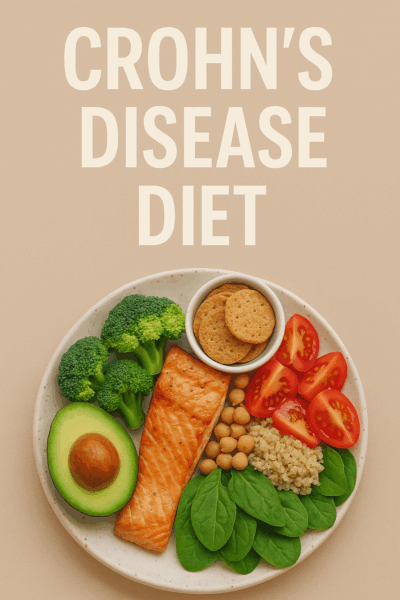

Navigating the Crohn’s Disease Diet: What Really Works for Gut Healing. Living with Crohn’s disease can feel overwhelming, especially when it comes to food choices. In this episode, we dive deep into what a Crohn’s disease diet really looks like—from common triggers to healing foods that support gut health. You’ll learn practical tips, how to track your flare-ups, and the difference between short-term elimination diets and long-term eating strategies. Learn about Brian Bentow’s story of how we was diagnosed with Crohn’s Disease in 2018 and decided to use diet to heal instead of medication. He recently launched his company Get Saucy where they make and sell sauces that are autoimmune paleo compliant to help people stick to the diet and have some good flavors and tastes without eating only bland food.
Brian Bentow is currently co-founding Get Saucy, where they’re redefining food innovation with allergy-friendly, globally inspired sauces and seasonings. Their mission is to create bold, inclusive flavors that work for all restricted diets—bringing more people to the table and starting a wave of mealtime inclusivity. Inspired by his 2018 diagnosis of Crohn’s diease and Brian’s decision to use food to heal his crohn’s diesease instead of medication.
Learn more at http://getsaucy.com
Transcript
AnnaLaura Brown: Today everybody, I am happy to welcome Brian Bento to Autoimmune Rehab and we are going to be talking about a couple different things today. things that we haven’t. really talked about before. So, it’s always exciting when we get to talk about some new fresh things. We talking about his journey with Crohn’s disease and psoriasis and then also about spices and sauces and, some things about autoimmune paleo and some of the challenges there and then what he has done with his own company to actually help it make it easier for you to find foods that you can eat with your digestive challenges or…
AnnaLaura Brown: autoimmune issues and things like that. welcome to Autoimmune Rehab, Brian. Why don’t you start off by telling us a little bit about yourself?
Brian Bentow: Yeah, sure.
Brian Bentow: So, I’m a serial entrepreneur. I, majored in computer science. I was a software engineer for many years. Spent a lot of time sitting in front of a computer just coding. And I never thought I would get into CPG.
Brian Bentow: My goal was always to be a chief technology officer of a successful software company. Yeah.
AnnaLaura Brown: And then you probably started that journey to changing when you found out that you had Crohn’s disease.
AnnaLaura Brown: Tell us a little bit about how that went down for you.
Brian Bentow: So, when I was around 35 years old, I started having a lot of different symptoms. I had oily patches on my elbows. I’d get ulcers on my tongue. I would have, the typical symptoms of Crohn’s disease, urgency right after a meal, stomach pain at night, waking me up at 2 o’clock in the morning. I had a lot of different symptoms. I couldn’t breathe out of my nose at night. And I went to a bunch of different doctors. I went to dermatologists. I went for the rashes. They gave me a steroid ointment that got all over my sheets and my clothes. I went to an ENT that preribe steroids for my nose to help me breathe at night. And I went to a gastroenterenterologist.
Brian Bentow: Eventually, I had a colonoscopy and he diagnosed me with Crohn’s disease. I have a brother who has Crohn’s disease as well and he recommended that I go on Inivio. I did some research. I looked up Intivio and I was afraid of some of the side effects. So, I went to a functional medicine doctor and he told me about the autoimmune protocol diet and how it had helped some of his patients. So, I went online. I read all about it. I said, “All right, I can commit to this.” he also wanted me to try some supplements, but I decided that I wanted to try just with food and food alone. because the supplements had a lot of interesting, ingredients, like licorice root that I had never heard of before. And so, I did the diet.
Brian Bentow: Initially, I would have one cheat day a week, but that didn’t work because every time I had the cheat day, it would set me back for a week. So, once I read on a blog that someone says you have to be 100% compliant, 24/7. And after 2 months of being 100% compliant, all my symptoms resolved and my inflammation went down by over 90%. And I went back to my gastroenterenterologist with my blood test results and my stool test results. And he looked at them, he’s like, “Wow, this is amazing. Which treatment are you on again?” And I said, “No treatment.” He’s like, Which medication are you on?” And I said, “No medication.” And he said, what are you doing?” And I said, “I’m doing the autoimmune protocol diet.” And he said, ” if you were on the medication and you had these results, I’d be ecstatic.” And then I said, why did I have to learn about this diet from a functional medicine doctor? Why didn’t you tell me about the diet?”
Brian Bentow: and he said, ‘ 40 years ago when I went to med school, they gave me a book this thick and only one page was on nutrition, and I’m not a dietician. And in the last 40 years, I’ve only had one other patient who’s done the diet and had success. And I did a colonoscopy on him. I looked at his colon, it was completely healed. However, after about a year, he got tired of doing the diet. So he went back to eating the way he was eating before and his symptoms came back with a vengeance and eventually I put him on medication and so I don’t think the diet is sustainable and I don’t recommend the diet to anyone.
Brian Bentow: of course, if I had been diagnosed with celiac disease, he would have recommended the free diet and he wouldn’t have offered me, biologics or anti-inflammatories or any other medication. That’s But when it comes to Crohn’s disease, they haven’t yet started recommending a diet as the primary intervention or the standard of care. So, I took that information and I kind of let it sink in. And for the next three years, I cooked all my own meals from scratch. And my wife was a stay-at-home mom. she made my lunches, put little love notes in my lunches. She cooked all the meals or we would eat out. And I went from doing that and I had a full-time job and two startups I was doing on the side to having to cook all my meals from scratch, doing batch cooking on the weekend.
00:05:00
Brian Bentow: lots of times I would just eat tuna out of a can and very bland food that was not exciting at all. and on the weekends I try different recipes, but you’d go to the store, get a laundry list of ingredients, make a giant mess, stink up the house, and then the food wouldn’t even taste good. My family would try it. They’re like, “I’d have to eat it by myself, sitting in a corner staring at a wall.” And it was not very much fun. and sometimes they’d ask me to eat it outside. and so it just wasn’t a great experience. And then I had some success in my career, so I decided to look for a chef that could make my food for me. And I worked through with a couple different chefs. they drop food off at my house twice a week and I tried to find ones that could replicate my favorite meal, which is chicken tikka masala.
Brian Bentow: And the first chefs I spoke to, they said, “It’s impossible to make chicken tikka masala without tomatoes or dairy or these spices.” And so I said, “Next.” and there were other chefs that said, ” I’ve never made it before, but I’m willing to try.” And so I paid them. They made something that looked like tika masala, but it didn’t taste anything like tikka masala. And eventually I was introduced to my co-founder, and He went to the international culinary center in New York. He’s worked at six Michelin star restaurants as a sauier. And he worked in the executive dining program at JP Morgan for six years and made meals for the CEO Jamie Diamond, US presidents and foreign dignitaries. He also had a private chefing business in Long Island, New York, and made meals for affluent people with Crohn’s disease already.
Brian Bentow: So he already had some experience making sauces and making sauces for people with autoimmune diseases. And so I asked him to make me three sauces. One is tikka masala and the other two he could decide whatever he wanted. And I gave him three months. And instead of making three sauces, he made me eight sauces. And when I took a bite of the tikka masala, it brought me back to my first date with my wife where I took her to my favorite Indian restaurant. And it was the first time I had experienced that memory through my taste buds in over 6 years. And then I realized that now that I finally have my tikka masala back, what if Suhan decides not to make him anymore or he, god forbid gets hit by a bus? How am I going to enjoy tikka masala for the rest of my life?
Brian Bentow: life and how am I going to have all these great flavors for my family? I have to create a company and put the recipes in the company and control the means of production. And so that started with a very very modest goal of just having tika masala and…
Brian Bentow: then eventually evolved into starting a CPG company and trying to make these products available to everyone everywhere, who have food allergies or autoimmune diseases.
AnnaLaura Brown: Wow, that’s really amazing.
AnnaLaura Brown: I mean, you touched on a lot of things there because like you said, I mean, automat paleo for anybody that hasn’t researched is super strict and it’s really hard to follow. it’s one of those things where, if you have a really extreme health issue, gut issue, it probably something you want to take a look at. But a lot of people, I mean, kind of like what that doctor had mentioned that the one guy tried it, it’s really hard because you’re right, a lot of the food is bland because of the seasonings. You can’t have the dairy, you can’t have, of course, the gluten, the grains, the night shades,… all that kind of stuff. So, how did he do that without, the night shades, like the tomatoes and things like that? I’m just curious, how did he formulate that?
AnnaLaura Brown:
Brian Bentow: Yeah. …
Brian Bentow: it turns out that tomatoes are amazing. They have umami flavor, acidity, sweetness. there’s a complex set of compounds that make up a tomato. And from his experience in culinary school, they had a machine that could take a vegetable and convert it into a clear liquid. And you could literally drink a clear liquid and it would taste like tomato. It basically boil down a vegetable to its essence.
Brian Bentow: and he had to bring in what eventually was six or seven different ingredients to replace all the different aspects of a tomato. So, when you look at our recipes, you’ll notice that they have, 15 to 20 different ingredients because we have to source specialized ingredients to cover all of these different umami flavor, sweetness, acidity. So, for example, in our tomato-free marinara, we have beets, carrots, butternut squash, we have some seaweed, which has umami flavor. So, there’s just a lot of different vegetables that come together to really make the flavor come to life.
00:10:00
AnnaLaura Brown: That’s cool. So, tell us a little bit more about,…
AnnaLaura Brown: you know, how that kind of thing works. Are you guys actually selling the meals? You selling the recipe, you sell the ingredients for people to make them themselves or all of the above?
Brian Bentow: Yeah. …
Brian Bentow: we’re selling ready-made sauces, seasonings, condiments, and dressings for people so that they can, let’s say, go to the store, buy some protein, could be meat, could be, some other whatever protein they source they want, some vegetables. They cook them, they add the sauce just like they would do today with other ready-made sauces like, rayos or ragu and then they can have a meal in their home in under 10 minutes with very very little effort.
Brian Bentow: So, I also want to say that when I was first diagnosed, my wife reminded me of our second date where I went to Trader Joe’s and I bought a little jar of Thai curry sauce from Trader Joe’s and I bought some rice, red bell peppers, lime, cilantro, and I made her a Thai chicken dinner. And she said, “Wow, this is the best plate of food a man has ever made for me.” And I felt like a hero. And after I was diagnosed with Crohn’s and I had to start cooking for myself, my wife said, why don’t you just cook your Thai curry sauce?” And I said, “I don’t know how to cook Thai curry.” When, on our second date, I actually went to the store and bought a ready-made sauces. And then I started looking for ready-made sauces for the autoimmune protocol diet or Whole 30, that was compliant with all these restrictions and there was nothing that I could find.
Brian Bentow: So, that’s what drove me to create the company this is the product that I wanted when I was first diagnosed with Crohn’s disease. I don’t like to cook. I’m not very good at it. My cooking skills are probably two or three standard deviations below the average, but I can cook meat and I can cook some vegetables and I can pour sauce on it. That’s within my wheelhouse and so that’s what I want to make available to other people. You can use our products in other recipes and you can, dress them up and make them more complex or you can keep it pretty simple. It’s up to you. We’re also selling our products to food service companies. We have a meal service company called Urban AIP that we partnered with and we provide them with our tikka masala sauce and they use it in some of their meals and they sell frozen meals that they deliver to your house.
Brian Bentow: My plan was more focused on I wanted some of the components of the meal to be fresh. So you can use meat that was never frozen.
Brian Bentow: You can use vegetables, that were never frozen. So you have your fresh component and then you have a ready-made sauces that you can pour on top and just simmer for a few minutes and you have your meal.
AnnaLaura Brown: And that’s a great idea,…
AnnaLaura Brown: too, because the reality is it’s cheaper a lot of times to cook at home, rather than ordering those pre-made meals. And, some people really like to cook. And even for somebody like me, I like to cook and I feel like I’m a pretty good cook, but I know, trying to stick with, especially if currently I’m lucky enough that I’m not on a super restrictive diet, but there’s obviously, some things I still can’t have. And, trying to cook around a lot of that, reading all the labels, everything else, that can be a real pain. And I feel like one of the reasons why people give up not just on autoimmune paleo but just even regular paleo or just even restrictive diets and sometimes they just say whatever I’ll just take the drug is because it’s easier and…
AnnaLaura Brown: so those sauces definitely I think that sounds like you’ve really created a hit with that. So how long have you had those out for then at the moment?
Brian Bentow: Yeah. …
Brian Bentow: we just launched about a month ago and we launched our first product, our tikka masala and we’re about to launch our next two products, our taco seasoning, which are night shade free and our tomato free marinara sauce. Those will be coming out soon. And by the end of this year, we want to have six products on the market. We’ve been working on this for about a year now. It took us a long time to get our organic certification…
AnnaLaura Brown: Mhm. Yep.
Brian Bentow: because when you get certified, all of your suppliers also have to give you their certification documentation. And a lot of the rules around organic certification changed last year. So, it caused a lot of delays as everyone was getting reertified.
00:15:00
Brian Bentow: But now that we have our certification, we’re super excited about launching all these products. And I also want to mention that one of the things that I’ve learned from talking to a lot of different people is that different people have different allergies, even if they have the same diagnosis. I’ve met people with Crohn’s disease and they have problems with gluten and dairy only. And I’ve met people who are fine with dairy but have problems with night shades and gluten, or some other people who have problems with corn. So, there’s a lot of different allergies. our products aim to cover a pretty broad set. So, they’re accessible to a large group of people, but obviously there’s some people who are allergic to coconut or some, onions or even garlic.
Brian Bentow: And so our products won’t work for every single person,…
Brian Bentow: but we’re going to have products that cover a very large group of people who today have no products to buy, especially for these global cuisines.
AnnaLaura Brown: Yeah, that’s great.
AnnaLaura Brown: I love that idea. And so your goal is really to make everything like AIP or autoimmune paleo compliant, but like you said, not necessarily free of every allergen that everybody possibly could have,
Brian Bentow: And one of the things I like to ask people what do the carnivore diet and the raw vegan diet have in common? And most people have no idea what I could possibly be getting at. And what it is is that both diets are focused on whole foods that we’ve been eating for, however long humans have been around.
Brian Bentow: and they have no processed foods, no preservatives, no seed oils, no refined sugar, no food additives, etc., etc. And the other thing that’s true about those diets is that they’ve helped people with autoimmune diseases get to remission. I don’t believe that there’s any one perfect diet. And I think that some people want to eat meat, some people want to do all vegetarian, somewhere in between.
Brian Bentow: But it’s all about figuring out what you personally are allergic to and what types of food you feel the best on. And that was one of the biggest areas of confusion when I first started this was, okay, now I found what worked for me. I started to add a few foods back. Some of them I was able to add back successfully. Some I still don’t eat night shades. I still don’t have gluten. I still don’t have dairy, but it’s just interesting for people to think about. There’s just so much confusion around nutrition. people don’t understand how this all works. And what we want to do is help bring clarity to that and…
Brian Bentow: also give people a practical solution to enjoying their food again.
AnnaLaura Brown: That’s awesome.
AnnaLaura Brown: I love that because yeah, like you said, one diet is not necessarily going to work for all people and we all have different things and sometimes you have to give up things for a period of time, but that doesn’t mean you have to give it up forever necessarily. And yeah, so I really love what you’re doing. So, currently, I’m assuming the products are available only online. Do you have a vision to eventually get them into grocery store chains?
AnnaLaura Brown: What’s your long-term plan for that? I think
Brian Bentow: Yeah. …
Brian Bentow: currently they’re only available on our website, getsi.com. We’re going to be on Amazon in a couple weeks. And then we’re also working with food service. that’s meal delivery companies like Urban AIP. We hope to get into a lot of other meal delivery companies longer term. Once we have built up a strong following online and on Amazon, then we will move into specialty grocery Whole Foods, Sprouts, Mother’s Market, Arowan, those sorts of places. but yes, my eventual goal is to be ubiquitous.
Brian Bentow: One of the things I learned especially recently is that people who work in food service, for example, we went to the future food tech conference and we were at the Marriott Marquee Hotel and the head chef said, “Wow, this product is amazing.” A couple weeks ago, we had some clients that called in room dining and they had a bunch of allergies and they were Indian and we had no idea what to make for them and we were super stressed out. We didn’t want to make something that made them feel sick and we didn’t want to make something that didn’t taste good. And my staff, we’re busy in the kitchen working on all these other orders. We don’t have the skill set. We don’t have the ingredients to really make anything that tastes good.
00:20:00
Brian Bentow: And so he said, I would buy a case of your product just to keep on hand in case they come back. And once I heard that, I realized that wow, it’s a really big problem in food service, in hotels, airlines, etc. It’s very difficult to accommodate people who have allergies. And I have experienced that myself when I fly to Europe or stay in doing restaurants sometimes I don’t have anything that I can eat and I just have to watch my family or friends eat and it’s not a great experience but just hearing it from their perspective they want to provide a great experience…
Brian Bentow: but they don’t know how or it’s just not feasible really got me thinking about how wow Maybe before we go to retail, I think, we should focus on food service and that’s what we’re
AnnaLaura Brown: Yeah, I love it.
AnnaLaura Brown: Yeah, that’s a good perspective because you think about it. I mean, even I know I’ve had the experience, not main things at the moment that I try to avoid are gluten, dairy, and sugar. you try to ask just for even gluten- free and dairyf free and it’s really hard. just they do gluten-free, but then it’s still got dairy in it, or whatever. And that alone can be challenging. You imagine, even more restrictions with paleo or…
AnnaLaura Brown: autoimmune paleo, they just like what,
Brian Bentow: 100%. Yeah.
Brian Bentow: So there’s also nursing homes, senior living facilities, they’re providing food. Oftent times it’s very bland because their patients have a lot of diseases and food allergies. And so we’re talking to some food service folks in the senior living space. We can provide them with delicious food that they thought that they could never have again tika masala for example but still be compliant with their, ketogenic diets, their diabetic, we have no added sugar. We can meet all of their dietary restrictions but still have an amazing, delightful experience. And that’s what we want to give people.
AnnaLaura Brown: That’s awesome.
AnnaLaura Brown: That’s cool. And have you been able to find that it’s been also a challenge to try to do it without having the price be really really high or how have you been able to balance that? Because I know that’s one of the other challenges people encounter with special diets is, the cost of the food is double, triple, quadruple what it is, the food that has the other ingredients in it.
Brian Bentow: Yeah, that’s a very good point.
Brian Bentow: Organic ingredients are 20 to 30% more expensive than conventional. we don’t have preservatives. our products last 18 months.
AnnaLaura Brown: Yep. Wow.
Brian Bentow: If we had preservatives, they could last 3 years. So it’s definitely more expensive to produce the products this way.
Brian Bentow: However, for people, if you think about one jar of our salt can make a meal for a family of four. So, it’s significantly obviously you have to still buy your protein and maybe you’ll buy some vegetables, but the idea is that it’s quite a bit less expensive than eating out. And if somebody was trying to make these meals themselves in food service, just the time alone to make pika masala, my chef who knows the recipe, and even if he had all the ingredients, it would still take him 2 hours.
Brian Bentow: So there’s a time savings component. There’s because we’re sourcing ingredients that are in bulk, we’re getting them much more costefficiently than you would get them yourself if you were buying them at the grocery store. So we can do it significantly cheaper and easier and faster than they would be able to do it themselves. That I think is where it just makes sense. And the other thing is that in addition to reducing cost and improving safety, reducing risk, we can also give them an opportunity to attract more customers that they wouldn’t have been able to get before. And if I was going out to eat with some friends or family and there were two restaurants and all other things being equal and one of the restaurants can accommodate my allergies and one can’t, which restaurant am I going to go to?
00:25:00
Brian Bentow: I’m going to go to the one that can accommodate my needs. And so there’s opportunities to generate more revenue and reduce costs and risk. I think it’s actually a no-brainer in many situations. Also, if you think about senior living facilities, there’s a guy named Hal Cranmer who has a website called a paradise for parents and he had this insane idea. What if we fed elderly people super healthy food? what would happen? And it turned out that they live longer, so he was retaining clients longer, and that’s good for business. And then these elderly people, they were doing so much better. They had more energy. They were happier. And so their adult children and their adult grandchildren are like, ” my grandpa, mom, or dad is doing amazing.”
Brian Bentow: And then they tell all their friends and their friends try to get their grandparents or parents into this senior living facility and it’s great for business. And so yes, it is more expensive to feed people healthy food, but there are certain types of businesses where the incentives are aligned and it makes sense. And so we’re looking for partners. We have a special page on our website to partner with us, who see using food free of allergens and…
Brian Bentow: processed food ingredients and want to bring them into their business and be an early adopter. We’re super excited about that.
AnnaLaura Brown: Yeah, that’s awesome.
AnnaLaura Brown: And I think I only bring that up just because I mean, let’s face it, anybody that’s in the allergy or autoimmune community, they’re used to the idea the food’s going to cost a little more. that’s how it goes. But I was just curious, how you balance all of that because, there’s obviously still at the end of the day a limit to what a lot of people are able and willing to pay. But, I think we are seeing this big resurgence in the whole, food is medicine concept and…
AnnaLaura Brown: the reality that people realize that if you don’t pay now, you’re going to pay later. So,
Brian Bentow: Yeah, there’s been some really amazing studies that have come out recently about medically tailored meals and…
Brian Bentow: how they help patients stay out of the hospital and that if you look at the cost of the food and the diet versus what it costs to be on Inivibio or some sort of biologic, it’s 80 or 90% less expensive in general to change your diet, even using, more expensive food than it is to go on medication, which involves blood tests. I was on a call last week and a guy told me that his wife was on a drug called Humra. She had rheumatoid arthritis and she was on it for, 15 years.
Brian Bentow: Eventually, it caused liver disease and she died way too young in her 50s and…
AnnaLaura Brown: Thank you.
Brian Bentow: it was tragic. And now he’s devoted his life to trying to educate people on diet and food as medicine because when you’re on these drugs, they have to monitor your blood test results. So they make sure that your liver is still functioning well because they do have side effects and sometimes the side effects don’t appear within a year or even 5 years. But imagine being on these drugs for 15 years and cutting your life short by several decades because of the fact that they numero was only FDA approved in 2002. It hasn’t even been around that long.
Brian Bentow: We don’t know what these drugs do to your liver after 40 years, but they can significantly reduce your health span and your lifespan, based on what this guy told me. And it’s super sad. I didn’t mention this, but my brother also has Crohn’s. He’s on a different biologic. And my father said, “The one thing that you could do for me is to get your brother to get off the medication and to change his diet.” And so I called my brother after He was diagnosed when he was 18. It was about 15 years before I was. And I told him, “Hey, I was able to be symptom free without medication.” So he asked me, ” what are you eating?”
Brian Bentow: And at that time I told him on what I was eating and he said you call that living. And so that some of these stories and replay in my mind almost on a daily basis and it’s what drives me forward to make this company successful so that my brother can get off medication. He cannot force himself to eat food that’s not palatable. I can, but he represents probably the vast majority of the population that would prefer to be on medication rather than change their diet.
00:30:00
AnnaLaura Brown: Gosh.
Brian Bentow: I want to make it as simple as, hey, instead of buying this jar of sauce at the store, buy that jar of sauce. Maybe you have to pay a little bit extra, but you’re preventing a lot of negative side effects. My brother had shingles in his 20s. He’s had inflammation.
Brian Bentow: His inflammation is much higher than mine. So there’s been during COVID he was immune compromised. It created a lot of challenges for him. But I need to make the diet easier so that other people can do it.
Brian Bentow: A very small percentage of people are willing to eat super bland food or spend hours and hours in the kitchen every day cooking. So that’s what and this company is going to be the vehicle to achieve
AnnaLaura Brown: Yeah, that’s awesome.
AnnaLaura Brown: That’s great. Yeah, I kudos to you. Seriously, because you’re right. I mean that’s and it goes back to just the response partly that you got from your original gastronologist doctor is a lot of times the doctors don’t bring it up either partly because they don’t know about it but also because they don’t think you’re actually going to be willing to change because most people can’t or won’t or like you said just the medication and the pill it’s viewed as the easy solution if you will whereas over the long term yeah it might be the easy solution…
AnnaLaura Brown: but it ends up being the more costly solution, it ends up causing you a lot of severe heart side effects. So, I think what you’re doing is great to be able to help people actually be able to implement it,…
Brian Bentow: Yes. Yeah.
AnnaLaura Brown: and be able to feel like they can actually live again and actually have food that tastes good. So, that’s awesome.
Brian Bentow: 50 years ago when people had celiac disease they would give them steroids anti-inflammatories or…
AnnaLaura Brown: Mhm.
Brian Bentow: perform surgeries on them and then the results and the outcomes were not good. At some point they figured out that just avoiding gluten works well enough and then there was a company that created the first free cracker.
Brian Bentow: It was called glutino. And now if you go to the store, there’s hundreds, I don’t know, maybe even thousands of products online that are free. However, I believe the same sort of transformation will happen for other allergens. Plants like nightshades, tomatoes, eggplants, etc., they produce toxins to prevent animals from eating them. It’s part of their defense mechanism. And some humans are allergic to those toxins. Solanine and nightshades as an example. There’s people with peanut allergies. If you went to the doctor and you had a peanut allergy, he would tell you, “Hey, stop eating peanuts.” But if you have a nightshade allergy, he doesn’t say, “Stop eating nitades.” Or if you have a dairy allergy, they might tell you stop eating dairy or gluten, they definitely tell you to not eat gluten. The point is that it’s really, really simple. This isn’t complicated.
Brian Bentow: It worked for disease. Celiac disease is one autoimmune disease. There’s maybe a hundred other autoimmune diseases and they all involve some sort of food allergy. There’s nothing more intimate and invasive in your environment than the food that you put inside your mouth that passes your protective skin barrier. So that’s how I think about food allergies and that’s what I think about I don’t even know if I really think about autoimmune diseases anymore as real diseases. If I have Crohn’s disease but I have no symptoms, my inflammation is lower than 95% of the population. Do I really have Crohn’s disease? I have no rashes. I have none of the symptoms.
Brian Bentow: Maybe these are just food allergies that have been classified as diseases.
AnnaLaura Brown: Yeah, that’s a good point to make, And you’re right. I mean, pretty much everybody with any kind of an autoimmune issue is going to have, some kind of food sensitivities, food allergies. some people have other root causes as well. Things like co- infections like Lyme infections and other things like that, mold, stuff like that. But yeah, you bring up a good point.
AnnaLaura Brown:
Brian Bentow: I think the interesting thing about these on our website on our resources section,…
AnnaLaura Brown:
Brian Bentow: we have links to some really good articles and papers and books on autoimmune disease and they found something called the second hit hypothesis. That’s what people talk about.
00:35:00
Brian Bentow: So, first you have to have the DNA for autoimmune disease. So, in my case, my mom has Hashimoto’s. I have an uncle who has ulcerative colitis. I have a brother who has Crohn’s. But even if you have the DNA, it doesn’t necessarily mean that it’s going to trigger. For my brother, it started when he was 18. For me, it didn’t happen until I was 35. something in your environment. It could be something due to stress or an infection or the food that you’re eating causes your immune system to kind of develop antibodies to these food compounds and your immune system has a memory and once you develop this antibbody you have that food allergy for the rest of your life.
Brian Bentow: This is the model that I’ve been developing as I’ve been reading and based on my own personal experience and talking to a lot of people of how these autoimmune diseases and food allergies seem to work. And they’ve even shown that you can reset your immune system. There are these memory B cells and they have a CARTT therapy where they can kill those memory B cells and reset your immune system back to its nent state like you were a toddler an infant and that has been successful in getting people with Lyme disease or lupus can’t remember which one it was to get into remission…
Brian Bentow: however there are some negative consequences because now you have a very susceptible vulnerable immune
AnnaLaura Brown: Yeah. Yep.
Brian Bentow: So it has its risk. It’s also can be very expensive. So at the end of the day, there’s a lowrisk relatively inexpensive solution, which is to change your food, to change your diet, and simply avoid your food allergies.
AnnaLaura Brown: It’s a good point. So, if you could go back in time to,…
AnnaLaura Brown: when you first got your diagnosis, what is something now that you wish you would tell yourself?
Brian Bentow: First of all I wish I had gotten my colonoscopy 9 months earlier.
Brian Bentow: I went through a period of 9 months where I really struggled and I kept a food journal.
Brian Bentow: I tried to keep track of what symptoms I had when I ate certain foods, but I wasn’t really paying attention to spices. Often times people don’t think about the nightshade seed spices. They think about chicken, beef, certain vegetables, kind of the major components of the meal. And these smaller ingredients, although they don’t contribute significantly to the calories, they can cause a lot of inflammation.
AnnaLaura Brown: Yeah. Yep.
Brian Bentow: Paprika also some of the food additives like preservatives, citric acid. It took me a long time to really realize that I didn’t even know where citric acid came from.
Brian Bentow: I thought it was made from citrus fruits, but it turns out that it’s made by a type of black mold and it’s grown in a vat or something like that. It’s food It’s not a natural food. So, learning about ingredients and how they’re really would have helped save me a lot of pain. The absolute most important thing that I learned and I wished I knew immediately was that I had to be 100% compliant that having cheat days won’t work.
Brian Bentow: So yeah, I think those are the things but I also hope that no one’s will have to deal with this moving forward because will be successful and once these products are available people will not tell their patients that the diet isn’t sustainable anymore. There will be a solution in the market and nobody will have to go through the pain that I went through. My goal ultimately is to help people avoid unnecessary suffering and to enjoy their food again. And just with a gluten-free diet, I hope that nobody goes through…
Brian Bentow: what people were going through 50 years ago free with gluten. And similarly, I hope no one has to go through what people are going through today with autoimmune diseases.
AnnaLaura Brown: That’s awesome.
AnnaLaura Brown: That’s great. Thanks so much for sharing, Brian. We’ve had a lot of wisdom. So, we will be linking below their website. I know we’ll include some sort of coupon or something that I think you’d mentioned below that people can so yeah, Spread the word, too. if you have any connections that are in, any of these businesses, things like that that Brian can talk to to help make it better available so it makes it easier for you when out eat, when you fly, all these different things, because This is important. And if you’ve been on this autoimmune healing journey for any amount of time, you’re by now have become well aware that what you eat definitely impacts you. So, Yep. Thank you.
Request a free foundations of wellness supplements kit.
Autoimmune Healing Blueprint Kit with Ebooks and Video
Did you find this helpful? Donate to help me be able to continue writing more content.
My Favorite Products (Affiliate links- if you make a purchase I may earn a small commission)
Thrive Market - healthy gluten free, sugar free and speciality online food and household products
Silk and Sonder Monthly Journals and Planners
My Portable Infrared Sauna
Self Care Journal
Olipop - healthy soda with probiotics and prebiotics
Digestion Kit
Stress Oils


