
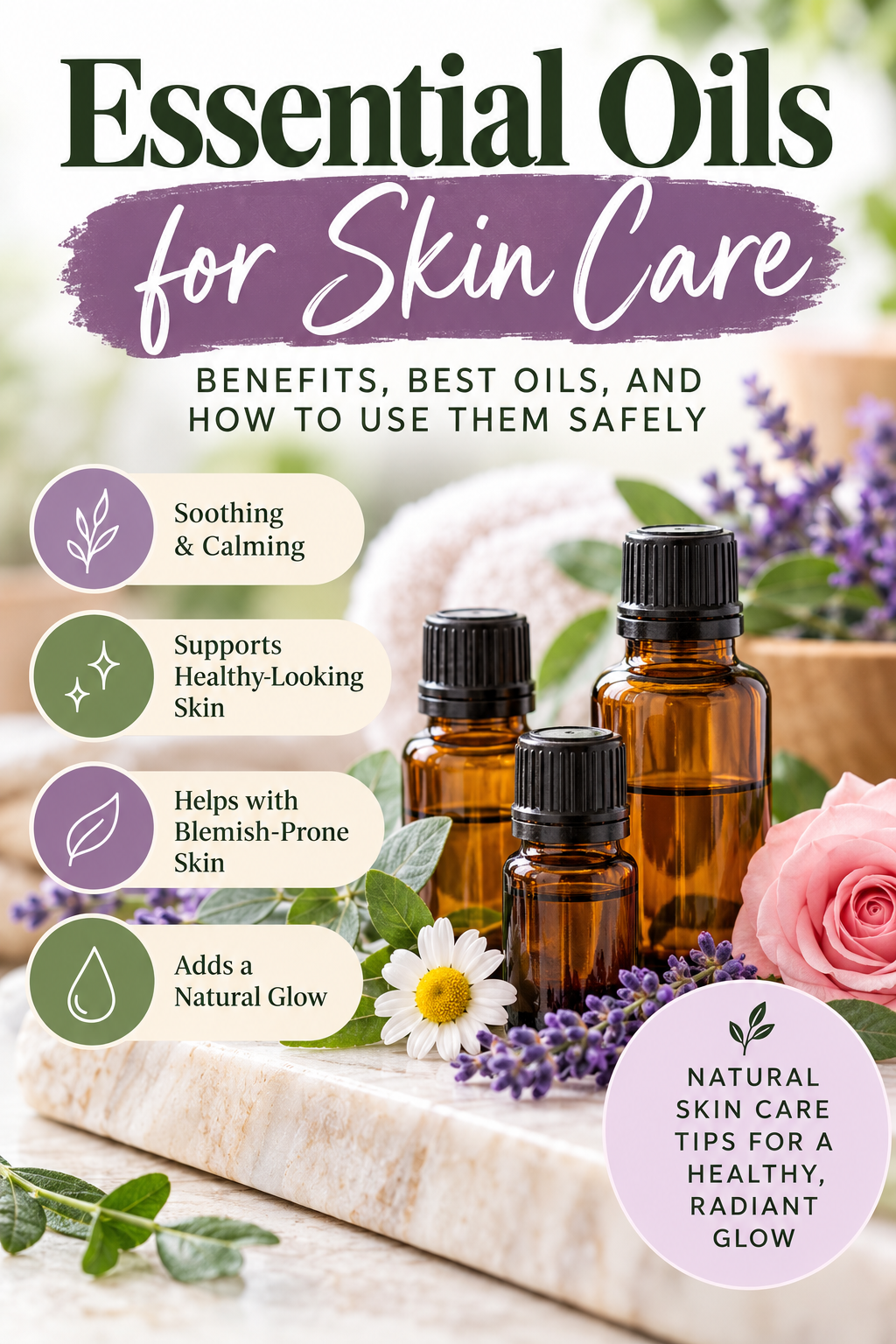
Essential oils for skin care have become a popular addition to natural skin care routines, offering beautiful aromas and plant-derived compounds that may support healthy-looking skin. From lavender and frankincense to tea tree and rose, these concentrated botanical oils are often used in homemade moisturizers, facial oils, body lotions, and aromatherapy rituals.
But are essential oils actually good for your skin? Which oils are worth considering, and how can you use them without causing irritation?
Whether you’re looking to simplify your beauty routine, explore natural skin care ingredients, or create a relaxing self-care ritual, understanding the benefits and precautions of essential oils can help you make informed choices.
In this guide, we’ll explore some of the most popular essential oils for skin care, how to use them safely, and what to know before adding them to your daily routine.
What Are Essential Oils?
Essential oils are concentrated aromatic compounds extracted from plants, including their flowers, leaves, bark, roots, and peels. They capture some of the characteristic scents and chemical compounds of the plants from which they originate.
Unlike traditional carrier oils, such as jojoba, coconut, and sweet almond oil, essential oils are highly concentrated and volatile. They evaporate relatively easily and are typically used in small amounts.
Essential oils are commonly incorporated into skin care products for their fragrance, sensory qualities, and certain properties that researchers continue to investigate.
However, natural does not automatically mean gentle or safe for every skin type. Some essential oils can cause irritation, allergic contact dermatitis, or increased sensitivity to sunlight. Proper dilution and careful product selection are essential.
7 Essential Oils to Consider for Skin Care
Different essential oils have different properties, and not every oil is appropriate for every skin concern. Here are seven popular options and what you should know about each.
1. Lavender Essential Oil
Lavender is one of the most recognizable essential oils in natural skin care. It is frequently used in body oils, bath products, lotions, and relaxing evening routines.
Why people use it:
- Its floral aroma can make a skin care routine feel calming and enjoyable.
- Laboratory research has explored its antimicrobial and anti-inflammatory properties, although evidence for treating human skin conditions remains limited.
- It is a popular ingredient in products designed for a soothing, spa-like experience.
How to use it: If you choose a lavender-infused body oil or moisturizer, select a properly formulated product intended for your skin type. Avoid applying undiluted lavender essential oil directly to your skin.
Lavender can cause allergic reactions in some people, particularly with repeated exposure.
2. Frankincense Essential Oil
Frankincense essential oil is derived from the resin of Boswellia trees. It has a warm, woody aroma and is frequently included in natural beauty and aromatherapy products.
Why people use it:
- It is popular in facial oils and moisturizers marketed for mature-looking skin.
- Its plant compounds are being studied for potential antioxidant and anti-inflammatory effects.
- Its distinctive scent can add a relaxing element to a self-care routine.
How to use it: Look for a facial product formulated with frankincense essential oil at an appropriate concentration. Apply according to the product directions and discontinue use if irritation develops.
Although frankincense is often marketed for fine lines, wrinkles, and skin rejuvenation, strong clinical evidence demonstrating these benefits is limited. It should not be considered a proven anti-aging treatment.
3. Tea Tree Essential Oil
Tea tree essential oil is derived from the leaves of the Australian tea tree, Melaleuca alternifolia. It is especially popular in products designed for blemish-prone skin.
Why people use it:
- It has antimicrobial properties demonstrated in laboratory studies.
- Some clinical research suggests that properly formulated tea tree products may help improve mild acne.
- It is available in cleansers, spot treatments, and other products for blemish-prone skin.
How to use it: Choose a commercially formulated acne product rather than applying concentrated tea tree oil directly to blemishes.
Tea tree oil can cause irritation and allergic contact dermatitis, particularly as it oxidizes with exposure to air and light. Store products according to their instructions and avoid old or improperly stored oils.
Tea tree oil is toxic if swallowed and should never be ingested.
4. Rose Essential Oil
Rose essential oil is prized for its delicate floral fragrance and use in luxurious skin care products.
Why people use it:
- Its fragrance can make moisturizing feel like a spa treatment.
- It is commonly included in facial oils, creams, and body products.
- Some of its components are being studied for antioxidant and other biological properties.
How to use it: Consider a rose-scented moisturizer or a professionally formulated facial oil. If you have sensitive skin, fragrance-free products may be a better choice.
Rose essential oil should not be confused with rosehip seed oil. Rosehip seed oil is a carrier oil that contains fatty acids and other naturally occurring compounds and is often used as a facial moisturizer.
Neither product should be assumed to eliminate wrinkles, scars, or pigmentation.
5. Geranium Essential Oil
Geranium essential oil has a fresh, floral scent and is frequently used in natural perfumes and skin care blends.
Why people use it:
- It adds fragrance to facial and body oils.
- It has been studied for antimicrobial and antioxidant properties in laboratory settings.
- It is sometimes included in products marketed for balancing the appearance of oily skin.
How to use it: If you enjoy its fragrance, look for a diluted, skin-compatible formulation. Avoid relying on geranium essential oil to regulate oil production or treat acne, as reliable clinical evidence for these effects is lacking.
As with other essential oils, irritation and allergic reactions are possible.
6. Chamomile Essential Oil
Chamomile is associated with soothing skin care and calming aromatherapy. Roman and German chamomile are different plants with different chemical compositions, so their properties are not interchangeable.
Why people use it:
- It is included in some products designed for dry or easily irritated skin.
- Certain chamomile compounds have demonstrated anti-inflammatory activity in laboratory research.
- Its gentle, herbal fragrance can complement a relaxing evening routine.
How to use it: Choose a formulated moisturizer or body product rather than applying concentrated chamomile oil to irritated skin.
Chamomile can cause allergic reactions, particularly in people sensitive to plants in the Asteraceae family, such as ragweed and daisies. It is not a substitute for treatment of eczema, rosacea, or other inflammatory skin conditions.
7. Helichrysum Essential Oil
Helichrysum essential oil, sometimes called immortelle, is derived from flowering plants in the Helichrysum genus.
It has gained attention in natural skin care products marketed for mature skin and the appearance of scars.
Why people use it:
- It is included in some facial oils and specialty skin care blends.
- Researchers have investigated certain helichrysum compounds for their biological activity.
- Its herbal aroma can add variety to a botanical skin care routine.
How to use it: Choose a properly diluted, professionally formulated product and follow its instructions.
Evidence supporting helichrysum essential oil for fading scars, reducing wrinkles, or repairing damaged skin is limited. Do not apply it to open wounds or assume it can replace established treatments.
Choosing an Essential Oil for Your Skin Type
Your skin’s needs should guide your choices. The most expensive or popular essential oil is not necessarily the best option for you.

Essential oils are optional additions to a skin care routine, not necessities. In many cases, a simple routine with a gentle cleanser, moisturizer, and sunscreen will provide more predictable results.
Carrier Oils: Why They Matter
One of the most important things to understand about essential oils is that they are not the same as carrier oils.
Carrier oils are vegetable oils used to dilute essential oils or moisturize the skin. They can help spread a concentrated essential oil more evenly and reduce the risk of irritation, although dilution does not eliminate that risk.
Here are several popular carrier oils used in skin care.
Jojoba Oil
Jojoba oil is technically a liquid wax ester rather than a conventional triglyceride oil. Its composition resembles some of the waxy substances naturally found on the skin.
It is commonly used as a facial moisturizer and massage oil and may be a useful option for people seeking a lightweight-feeling product.
Sweet Almond Oil
Sweet almond oil is a plant-based oil that helps soften and moisturize dry skin. People with almond allergies should seek advice from an appropriate health professional before using products containing it.
Fractionated Coconut Oil
Fractionated coconut oil is processed to remain liquid at room temperature. It is often used in massage oils and body care blends because of its smooth texture.
It may not suit every face, particularly if you are prone to clogged pores or breakouts.
Rosehip Seed Oil
Rosehip seed oil contains essential fatty acids and is frequently used in facial moisturizers and skin care blends.
It may help soften dry skin, but claims that it reliably removes scars or reverses aging should be viewed cautiously.
Important: You can use carrier oils on their own. You do not need to add essential oils to receive moisturizing benefits.
How to Use Essential Oils in Your Skin Care Routine
If you decide to incorporate essential oils into your routine, safety should come first.
Step 1: Choose a High-Quality Product
Look for a reputable manufacturer that provides the botanical name, ingredient list, and intended method of use.
The phrase “therapeutic grade” is not a universally regulated guarantee of purity or clinical effectiveness. A higher price or stronger aroma does not necessarily mean a product is better for your skin.
Step 2: Dilute Appropriately
Avoid applying undiluted essential oils directly to your skin.
For many healthy adults, a conservative starting dilution for a leave-on body product is around 0.5% to 1%, but the appropriate concentration varies by oil, intended use, body area, and individual sensitivity. Some oils require lower concentrations or should not be used in leave-on skin products at all.
Facial skin may be particularly sensitive, so a commercially formulated facial product is often the simplest option.
Step 3: Patch Test Before Regular Use
Before using a new product over a large area, test it on a small area of skin according to the product instructions.
Watch for redness, itching, swelling, burning, or a rash. Reactions may be delayed, so a single immediate check is not enough to rule out an allergy.
A patch test also cannot guarantee that you will never react to a product.
Step 4: Apply to Clean, Intact Skin
Use your product as directed, ideally after gently cleansing your skin. Avoid applying essential oils to broken, inflamed, or freshly shaved skin.
Do not apply them close to your eyes, inside your nose, or to other sensitive mucous membranes.
Step 5: Use Sunscreen
Some essential oils, especially expressed citrus oils such as bergamot, lime, and certain lemon oils, may contain compounds that cause phototoxic reactions. These reactions can result in painful redness, blistering, or dark discoloration after ultraviolet exposure.
Cold-pressed citrus oils can be particularly concerning. Some specially processed oils have reduced phototoxicity, but you should not assume that every citrus oil is safe in sunlight.
Check the product’s safety instructions and use broad-spectrum sunscreen with SPF 30 or higher during the day.
Step 6: Introduce One Product at a Time
Avoid adding several new oils to your routine simultaneously. If a rash or breakout develops, introducing one product at a time makes it easier to identify the possible cause.
If you experience a reaction, stop using the product. Seek medical attention if the reaction is severe, spreading, or persistent.
Essential Oils and Common Skin Care Myths
Natural skin care advice often includes claims that go beyond the available evidence. Here are a few important distinctions.
Myth: Essential oils are always safer than synthetic ingredients.
Reality: Natural compounds can be potent allergens and irritants. Safety depends on the substance, concentration, formulation, and how it is used.
Myth: Essential oils can replace sunscreen.
Reality: Essential oils do not provide reliable sun protection. Use a broad-spectrum sunscreen and protective clothing.
Myth: Essential oils can erase scars and wrinkles.
Reality: There is insufficient strong clinical evidence that essential oils erase scars or significantly reverse wrinkles. Moisturizers can temporarily improve the appearance of fine lines associated with dryness, while other evidence-based treatments may provide more substantial benefits.
Myth: If an essential oil is safe to diffuse, it is safe to apply to the skin.
Reality: Inhalation and topical application involve different exposure routes. A product intended for diffusion should not automatically be used on the skin.
Myth: Essential oils are a treatment for every skin condition.
Reality: Conditions such as eczema, rosacea, acne, and contact dermatitis may require specific treatments. Essential oils can sometimes worsen irritation and should not replace appropriate medical care.
Who Should Be Especially Careful?
Although many adults can use appropriately formulated essential oil products without problems, certain situations call for additional caution.
- People with sensitive skin, eczema, or rosacea: Fragrance and essential oils may aggravate symptoms. Fragrance-free products are often a safer starting point.
- People with known allergies: Review ingredient lists carefully and avoid oils related to known allergens.
- Pregnant or breastfeeding individuals: Safety varies by oil and exposure. Consult a qualified health professional before using concentrated essential oils, especially on large areas of skin.
- Children: Essential oils have age-specific safety considerations. Do not apply adult formulations to children without appropriate professional guidance.
- People using prescription skin treatments: Retinoids, acne medications, exfoliating acids, and other treatments may increase irritation. Ask a pharmacist or dermatologist before adding potentially irritating products.
Essential oils should never be swallowed as a skin care remedy. Keep them away from children and pets, and contact a poison control service if accidental ingestion occurs.
A Simple Natural Skin Care Routine
You do not need a complicated collection of oils to care for your skin. A consistent routine can be simple and effective.
Morning
- Gently cleanse your face, or rinse with water if that works for your skin.
- Apply a moisturizer suited to your skin type.
- Finish with broad-spectrum SPF 30 or higher sunscreen.
Evening
- Remove makeup, sunscreen, and daily buildup with a gentle cleanser.
- Apply your moisturizer.
- If you choose to use an essential oil-containing product, use a properly formulated product that your skin tolerates.
You can also make moisturizing part of a relaxing self-care ritual. Take a few minutes to massage a fragrance-free lotion or a suitable carrier oil into your hands, arms, or legs. Enjoying the routine does not require adding concentrated essential oils.
If your skin is already irritated, start with fragrance-free basics and allow your skin barrier to recover before experimenting with new products.
Frequently Asked Questions About Essential Oils for Skin Care
What is the best essential oil for skin care?
There is no single best essential oil for everyone. Tea tree oil has some clinical evidence for mild acne when used in appropriate formulations, while lavender, frankincense, rose, and other oils are popular for fragrance and cosmetic use. For dry or sensitive skin, a simple fragrance-free moisturizer may be a better choice.
Can I put essential oils directly on my face?
It is generally best to avoid applying undiluted essential oils directly to your face. Facial skin is sensitive, and concentrated oils can cause irritation or allergic reactions. Choose a product formulated specifically for facial use and follow its instructions.
Can essential oils help with acne?
Some research suggests that topical tea tree oil formulations may improve mild acne. However, evidence is more limited than for established treatments such as benzoyl peroxide and topical retinoids. Tea tree oil can also irritate the skin, so it is not suitable for everyone.
Can essential oils help with aging skin?
Essential oils are frequently marketed for their antioxidant properties and potential anti-aging benefits, but strong clinical evidence is limited. Moisturizers, daily sunscreen, and selected evidence-based treatments are more reliable choices for addressing visible signs of aging.
How long does it take to see results?
Results depend on the product and the concern you are addressing. A moisturizer may make dry skin feel softer shortly after application, but this does not mean an essential oil has produced a lasting skin change. Acne and other skin conditions may require several weeks of consistent, appropriate treatment.
Can I mix essential oils into my regular moisturizer?
It is safer to use a moisturizer that has already been formulated and tested with its fragrance or essential oil ingredients. Adding concentrated oils at home can affect the final concentration, stability, and tolerability of the product.
Final Thoughts: Keep Your Skin Care Routine Simple
Essential oils can add enjoyable scents and a botanical element to a skin care routine, but they are not essential for healthy skin.
Lavender, frankincense, tea tree, rose, geranium, chamomile, and helichrysum are all popular options, yet the evidence supporting their skin benefits varies considerably. Tea tree oil has some clinical evidence for mild acne, while many claims about wrinkle reduction, scar healing, and skin rejuvenation remain unproven.
The most effective approach is to choose products based on your skin’s needs, prioritize gentle ingredients, dilute essential oils appropriately, and pay attention to any signs of irritation.
Remember that healthy skin care is not about using the most products. It is about finding a routine that supports your skin barrier, protects against sun damage, and feels sustainable for your everyday life.
Your skin care routine should help you feel good in your skin—not leave you feeling that you need another product to fix it.
Disclaimer: This article is for educational purposes only and is not a substitute for personalized medical advice, diagnosis, or treatment. Consult a qualified health professional or dermatologist about persistent skin concerns or before using essential oils if you have allergies or other relevant health considerations.
Grab this set of amazing skin care with essential oils in it.
Request a free foundations of wellness supplements kit.
Autoimmune Healing Blueprint Kit with Ebooks and Video
Did you find this helpful? Donate to help me be able to continue writing more content.
My Favorite Products (Affiliate links- if you make a purchase I may earn a small commission)
Thrive Market - healthy gluten free, sugar free and speciality online food and household products
Silk and Sonder Monthly Journals and Planners
My Portable Infrared Sauna
Self Care Journal
Olipop - healthy soda with probiotics and prebiotics
Digestion Kit
Stress Oils


