
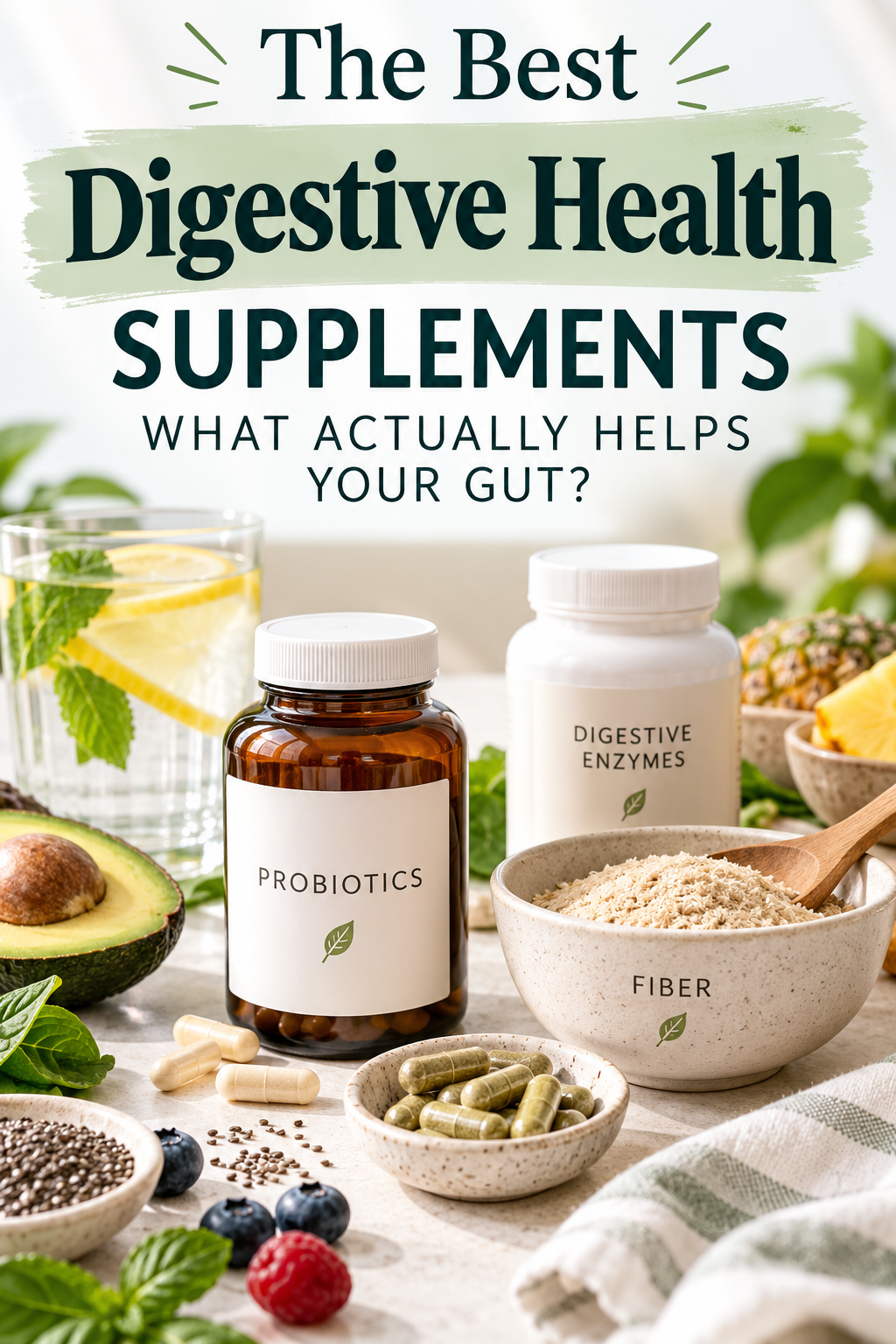
The best digestive health supplements- what are they? If you’ve ever struggled with bloating, gas, constipation, or digestive discomfort, you’ve probably wondered whether a supplement could help. With so many probiotics, digestive enzymes, prebiotics, and gut health powders on the market, figuring out which products are worth considering can feel overwhelming.
The truth is that the best digestive health supplement depends on your symptoms, your diet, and what’s causing your digestive issues in the first place. Some supplements have good evidence for specific uses, while others have more limited research or may not be necessary for most people.
In this guide, we’ll explore the most common digestive health supplements, what the research says about them, who might benefit, and how to choose products without wasting money on unnecessary additions to your routine.
This article is for educational purposes only and is not a substitute for personalized medical advice.
Why Is Digestive Health So Important?
Your digestive system does much more than break down food. It helps your body absorb nutrients, supports immune function, and houses trillions of microorganisms that make up your gut microbiome.
When digestion isn’t working well, you might experience symptoms such as:
- Bloating or excessive gas
- Constipation or diarrhea
- Abdominal discomfort
- Changes in bowel habits
- Feeling overly full after eating
- Difficulty tolerating certain foods
These symptoms can have many causes, including dietary changes, food intolerances, medication side effects, digestive disorders, and changes in gut motility.
Supplements may help address certain problems, but they aren’t a universal solution. Persistent or unexplained digestive symptoms deserve medical evaluation rather than simply adding more products to your daily routine.
1. Probiotics: Supporting Your Gut Microbiome
Probiotics are live microorganisms that may provide health benefits when consumed in adequate amounts. They’re found in certain fermented foods and dietary supplements.
Your gut naturally contains a diverse community of microorganisms. Researchers continue to investigate how these organisms interact with digestion, immune function, and overall health.
What can probiotics help with?
Evidence suggests that certain probiotic strains may help with specific digestive concerns, including some forms of antibiotic-associated diarrhea and certain symptoms associated with irritable bowel syndrome (IBS). However, results vary by strain, condition, and individual.
Not all probiotics have the same effects. A product that has been studied for one condition shouldn’t automatically be assumed to help with another.
What should you look for in a probiotic?
When comparing probiotic supplements, consider:
- Specific strains: Look for the full strain designation when available, not just the bacterial species.
- Research: Check whether the particular strain or combination has been studied for your intended use.
- Viability: Follow the storage instructions and check whether the stated quantity is guaranteed through the end of shelf life.
- Quality testing: Look for transparent manufacturing practices and credible independent testing when available.
- Ingredients: Review sweeteners, fillers, and potential allergens if you have food sensitivities.
A higher CFU count (colony-forming units) doesn’t automatically mean a probiotic is more effective.
Best for: People considering targeted support for a specific digestive concern, particularly when a healthcare professional can help identify an appropriate strain.
2. Digestive Enzymes: Helping Break Down Food
Digestive enzymes help break food down into smaller components that your body can absorb.
Your pancreas and digestive tract naturally produce enzymes, but certain medical conditions can interfere with normal enzyme production or activity.
Supplemental digestive enzymes may contain ingredients such as:
- Lactase: Helps break down lactose, the sugar found in milk.
- Alpha-galactosidase: Helps break down certain carbohydrates found in foods such as beans and some vegetables.
- Amylase: Helps break down starches.
- Lipase: Helps break down fats.
- Proteases: Help break down proteins.
Do digestive enzymes actually work?
They can be useful in specific situations. For example, lactase supplements can help some people with lactose intolerance digest lactose-containing foods more comfortably.
Prescription pancreatic enzyme replacement therapy is also an established treatment for people with pancreatic exocrine insufficiency.
However, broad-spectrum digestive enzyme supplements aren’t necessary for everyone. Evidence that they improve general bloating, gas, or digestion in otherwise healthy people is limited.
If you regularly experience discomfort after meals, identifying the underlying cause may be more helpful than taking a general enzyme blend.
Best for: People with a specific enzyme-related digestive issue, such as lactose intolerance, or those who have been advised to use enzymes for a diagnosed condition.
3. Prebiotics: Feeding Beneficial Gut Bacteria
Prebiotics are substances, often particular types of dietary fiber, that beneficial microorganisms in the gut can use.
Unlike probiotics, which introduce live microorganisms, prebiotics provide nourishment for certain existing microbes.
Common prebiotic ingredients include:
- Inulin
- Fructooligosaccharides (FOS)
- Galactooligosaccharides (GOS)
- Certain resistant starches
Prebiotics can also be obtained from foods such as onions, garlic, asparagus, oats, and legumes, although the amounts and types vary.
What are the potential benefits?
Some prebiotics can influence the composition and activity of the gut microbiome. Depending on the ingredient, they may also support bowel regularity.
However, prebiotic supplements can cause gas, bloating, or abdominal discomfort, especially when introduced in large amounts.
People with IBS or sensitivity to fermentable carbohydrates may find certain prebiotic ingredients aggravate their symptoms.
Start with food sources or small amounts of a supplement if appropriate, and increase gradually according to your tolerance.
Best for: People looking to increase their intake of particular fermentable fibers who tolerate them well.
4. Fiber Supplements: Supporting Regularity
Fiber is essential for digestive health, but many people don’t get enough from their diets.
Fiber supplements can be useful when food alone doesn’t provide enough fiber or when a particular type of fiber is recommended for a digestive concern.
Common options include the following.
Psyllium husk
Psyllium is a soluble, gel-forming fiber that absorbs water. It can help improve stool consistency and is often used to manage constipation. It can also help some people with IBS, including those who experience diarrhea or mixed bowel habits.
Partially hydrolyzed guar gum
Partially hydrolyzed guar gum (PHGG) is a soluble fiber that has been studied for bowel regularity and certain IBS symptoms. Individual responses vary, and the evidence is not equally strong for every use.
Methylcellulose
Methylcellulose is a fiber supplement that can help with constipation. Because it is less readily fermented by gut bacteria than some other fibers, it may cause less gas for certain people.
How do you choose a fiber supplement?
Consider your primary concern, how well you tolerate different fibers, and any medical conditions that affect your digestion.
Introduce fiber gradually and drink adequate fluids. Psyllium must be taken with sufficient liquid, and it may not be appropriate for people with swallowing difficulties or certain intestinal narrowing or obstruction risks.
Fiber supplements can also affect the absorption of some medications, so follow product instructions and ask a pharmacist about appropriate timing.
Best for: People who need additional fiber to support bowel regularity or manage certain digestive symptoms.
5. Magnesium: A Potential Option for Constipation
Magnesium is an essential mineral involved in hundreds of processes in the body. Certain forms, including magnesium oxide and magnesium hydroxide, can draw water into the intestines and help relieve constipation.
However, not all magnesium supplements have the same effects. Magnesium glycinate, for example, is often marketed for general supplementation, but it shouldn’t be assumed to work as a constipation treatment in the same way as forms specifically used for that purpose.
Is magnesium right for you?
Magnesium supplements can cause diarrhea, nausea, and abdominal cramping. Excessive supplemental magnesium can be dangerous, particularly for people with impaired kidney function.
Magnesium can also interfere with the absorption of certain medications, including some antibiotics and thyroid medications. If you take thyroid hormone replacement or other regular medication, ask your pharmacist or healthcare professional about safe dosing and timing.
Best for: Some people experiencing constipation who have been advised that a magnesium-based option is appropriate.
6. Peppermint Oil: An Option for Certain IBS Symptoms
Peppermint oil is a plant-derived product that has been studied for digestive discomfort, particularly in people with irritable bowel syndrome.
Enteric-coated peppermint oil capsules are designed to release their contents farther along the digestive tract.
Some research suggests that peppermint oil may improve overall IBS symptoms and abdominal pain in certain people, although results aren’t universal.
What should you know before trying it?
Peppermint oil can cause heartburn or worsen acid reflux in some people. It may also be unsuitable for certain individuals depending on their medical history and the formulation used.
Choose a product intended for the relevant digestive use, follow its instructions, and ask a healthcare professional whether it’s appropriate for you.
Best for: Some adults with IBS-related abdominal pain or discomfort, after considering other treatments and potential contraindications.
7. L-Glutamine: Does It Support Gut Health?
L-glutamine is an amino acid involved in protein metabolism and serves as a fuel source for cells, including cells lining the intestines.
Because of its role in intestinal biology, L-glutamine is often marketed as a gut health supplement.
However, the evidence requires careful interpretation.
Some studies have explored L-glutamine for specific conditions involving intestinal permeability, but findings from small or specialized studies don’t establish that it benefits everyone with bloating, food sensitivities, or general digestive complaints.
It isn’t a proven universal treatment for so-called “leaky gut,” and it shouldn’t replace evaluation or treatment for an underlying digestive disorder.
Best for: People considering it for a specific clinical reason in consultation with a healthcare professional, rather than as a routine supplement for everyone.
8. Postbiotics: Another Emerging Area of Gut Health Research
Postbiotics are preparations of inanimate microorganisms and/or their components that provide a health benefit. Some products marketed in this category contain microbial components or substances produced during fermentation.
Research into postbiotics is developing, and certain preparations have shown promising results for specific outcomes. However, findings from one preparation cannot necessarily be applied to another.
The term also appears in marketing, so it’s important to look beyond the label and examine the actual ingredients and supporting research.
Best for: Curious consumers who want to explore an emerging category while recognizing that evidence is product- and condition-specific.
Which Digestive Health Supplement Is Best for Your Symptoms?
The most useful starting point is to identify the problem you’re trying to address.
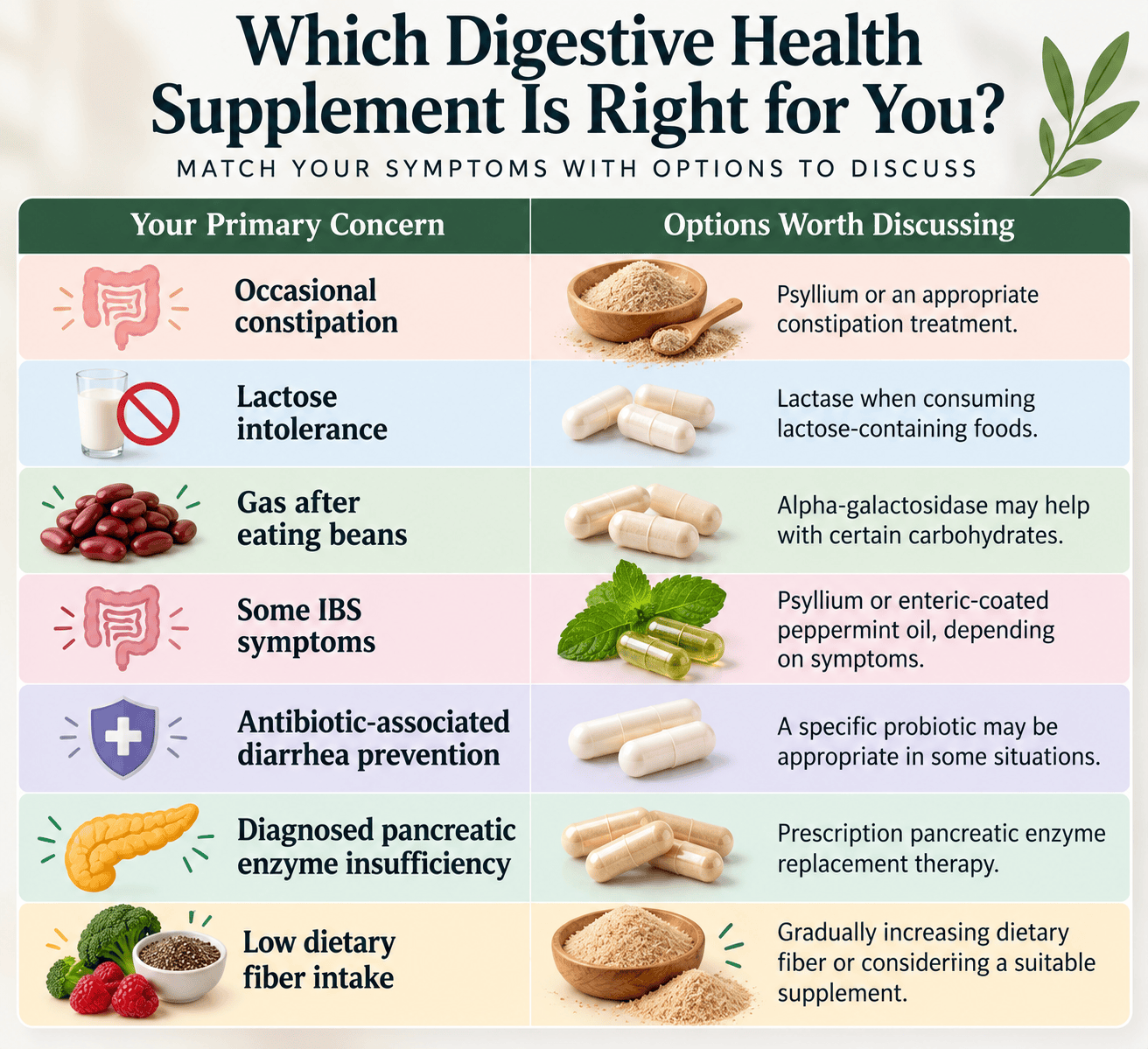
This table is a starting point, not a diagnosis or a recommendation to begin treatment. Symptoms such as bloating, diarrhea, and constipation can have multiple causes, and the appropriate approach depends on your medical history.
How to Choose a High-Quality Digestive Health Supplement
With so many products competing for attention, it’s easy to spend money on supplements that aren’t necessary or don’t address your actual needs.
Here are several practical ways to make a more informed choice.
1. Start with a specific goal
Instead of purchasing a supplement labeled “gut health,” identify what you’re trying to improve.
Are you dealing with constipation? Do you have diagnosed lactose intolerance? Are you trying to increase your fiber intake?
A clear goal makes it easier to evaluate whether a product has relevant evidence.
2. Read the entire ingredient label
Check the active ingredients, amounts per serving, serving size, and other ingredients. Watch for sweeteners, added fibers, or sugar alcohols that may worsen digestive symptoms in sensitive people.
If you avoid gluten or dairy, verify the allergen information and manufacturing disclosures. A product’s general wellness branding doesn’t guarantee that it meets your dietary needs.
3. Look for credible quality testing
In the United States, dietary supplements aren’t approved by the FDA for safety and effectiveness before they are marketed in the same way as prescription drugs.
Independent testing and certification programs, such as USP or NSF, may provide additional information about product quality. However, certification does not prove that a supplement will work for your particular symptoms.
4. Avoid products that promise too much
Be cautious of supplements claiming to detox your intestines, eliminate all bloating, repair every case of leaky gut, or cure autoimmune disease.
Digestive health is complex. A product making dramatic promises without credible clinical evidence deserves skepticism.
5. Introduce one change at a time
Starting several supplements simultaneously makes it difficult to identify what helps or causes side effects.
When appropriate, introduce one change at a time and keep track of symptoms, bowel habits, and possible triggers. Consult a healthcare professional if symptoms persist or worsen.
Can You Improve Gut Health Without Supplements?
Absolutely. Supplements may have a role, but they don’t replace the everyday habits that support normal digestion.
Consider these practical steps.
Eat a variety of fiber-rich foods. Vegetables, fruit, nuts, seeds, legumes, and whole grains provide different types of fiber and nutrients. Increase fiber gradually if your current intake is low.
Stay hydrated. Adequate fluid intake helps support normal bowel function, especially when you’re increasing fiber.
Eat regularly and chew thoroughly. Taking time to eat may help you notice fullness and identify foods that seem to trigger discomfort.
Move your body. Regular physical activity can support bowel regularity and overall health.
Prioritize sleep and stress management. The gut and brain communicate through a complex network of pathways. Stress can affect digestive symptoms, especially in people with disorders such as IBS.
Investigate persistent symptoms. Repeated bloating, diarrhea, constipation, or food intolerance may warrant evaluation for an underlying cause rather than another supplement.
Remember that no single diet is ideal for everyone. A varied, balanced diet adapted to your medical needs and food tolerances is generally a better starting point than unnecessarily restricting more and more foods.
What About Digestive Health Supplements for Hashimoto’s?
People with Hashimoto’s thyroiditis sometimes experience digestive symptoms, and some also have conditions that can affect digestion or nutrient absorption.
However, digestive symptoms shouldn’t automatically be attributed to Hashimoto’s or treated with a collection of gut health supplements.
Depending on your symptoms and medical history, a healthcare professional may consider factors such as thyroid hormone levels, medication timing, constipation, celiac disease, or other gastrointestinal conditions.
For example, untreated hypothyroidism can contribute to constipation. People with Hashimoto’s also have an increased likelihood of celiac disease compared with the general population, so appropriate testing may be worth discussing when symptoms or other clinical factors suggest it.
If you take levothyroxine, ask your pharmacist or healthcare professional about supplement timing. Calcium, iron, and certain other products can interfere with its absorption. Don’t stop or change prescribed thyroid medication to try to manage digestive symptoms.
The goal is to identify and address the underlying issue rather than assume that a probiotic, digestive enzyme, or “gut repair” formula is the answer.
When Should You See a Healthcare Professional?
Supplements are not a substitute for medical evaluation when digestive symptoms are persistent, severe, or unexplained.
Seek prompt medical attention for symptoms such as severe or worsening abdominal pain, bloody or black stools, persistent vomiting, or signs of dehydration. Unintentional weight loss, ongoing changes in bowel habits, difficulty swallowing, or persistent digestive symptoms also warrant medical assessment.
If you have a chronic condition, take prescription medication, are pregnant, or have kidney or liver disease, check with a qualified healthcare professional before starting a new supplement.
Frequently Asked Questions About Digestive Health Supplements
What is the best supplement for overall gut health?
There isn’t one supplement that’s best for everyone. Adequate dietary fiber, a varied diet, and appropriate medical care are good foundations. A targeted supplement may be useful when it addresses a particular symptom, dietary gap, or diagnosed condition.
Can I take probiotics and digestive enzymes together?
Some people can use both, but whether you need them depends on the reason you’re taking them. There isn’t a general rule that everyone benefits from combining them. Check the ingredients, consider potential side effects, and ask a healthcare professional if you’re taking medications or managing a medical condition.
How long do digestive health supplements take to work?
It depends on the supplement and the problem being addressed. Some products, such as lactase used with lactose-containing foods, act around the time of consumption. Fiber supplements may affect bowel habits over several days, while probiotic effects vary by strain and condition.
If a supplement isn’t helping within the period recommended for its intended use, or symptoms are getting worse, reassess the approach rather than continuing indefinitely.
Are digestive health supplements safe to take every day?
Some are appropriate for ongoing use in certain circumstances, but safety depends on the ingredient, dosage, duration, medications, and individual health conditions. More supplements do not necessarily mean better digestive health.
Can food replace digestive health supplements?
Sometimes. A varied diet can provide fiber, nutrients, and naturally occurring beneficial microorganisms from certain fermented foods. However, food alone may not address every condition. For example, people with pancreatic enzyme insufficiency generally need prescribed enzyme replacement.
Final Thoughts: Choose Supplements Based on Evidence, Not Hype
Digestive health supplements can be helpful tools, but the best choice depends on your individual needs.
Probiotics may help with certain condition-specific concerns. Digestive enzymes can be valuable for particular enzyme-related problems. Fiber supplements can support regularity, while peppermint oil may help some people with IBS symptoms.
Other products, including prebiotics, L-glutamine, and postbiotics, have varying levels of evidence depending on their ingredients and intended uses.
Rather than buying multiple products in the hope that something works, start by identifying your symptoms, reviewing your diet and medications, and seeking medical guidance when needed.
The most effective gut health routine is one that addresses your actual needs, uses evidence-based approaches, and doesn’t add unnecessary complexity to your life.
Disclaimer: This article is for informational and educational purposes only and does not constitute medical advice, diagnosis, or treatment. Consult a qualified healthcare professional before starting supplements, especially if you have a medical condition or take prescription medication.
Check out the bundle of digestive health products I use and recommend here.
Request a free foundations of wellness supplements kit.
Autoimmune Healing Blueprint Kit with Ebooks and Video
Did you find this helpful? Donate to help me be able to continue writing more content.
My Favorite Products (Affiliate links- if you make a purchase I may earn a small commission)
Thrive Market - healthy gluten free, sugar free and speciality online food and household products
Silk and Sonder Monthly Journals and Planners
My Portable Infrared Sauna
Self Care Journal
Olipop - healthy soda with probiotics and prebiotics
Digestion Kit
Stress Oils


